
Steep and High Roof Charges, Explained
Why steep pitches and two-story roofs cost more to replace, what the charge covers, how much to plan for, and what to ask your roofer about it.

The short answer: Steep and two-story roofs cost more because they have more surface, take longer, and need extra safety gear and material handling. For planning, RainTech's budget tool adds 15 to 30% for a steep or complex roof. Ask whether the steep charge is itemized or built into the price, and how your roof's pitch was measured.
In this guide 12 sections
- What Makes a Roof "Steep"?
- Why Steep Roofs Cost More
- Two-Story and High Roofs
- Cut-Up Roofs Cost More Too
- How Much Extra Should You Plan For?
- How It Shows Up on a Quote
- What a Low Quote on a Steep Roof Might Be Missing
- Questions to Ask Every Roofer
- What This Actually Means for Your Roof
- Frequently Asked Questions About Steep and High Roof Charges
- Get Your Roof Measured
- Related Reading
Two roofing quotes for similar houses, and the numbers don't match. One has a line that says "steep pitch" or "high roof charge." The other has nothing, or the cost is folded into a price per square. Neither quote is wrong. Both are accounting for the same fact: a roof that's harder to work on costs more to replace.
Here's what actually makes a roof steep or high, why it moves the price, how much to plan for, and what to ask before you sign.
What Makes a Roof "Steep"?
Pitch is rise over run: a 6/12 roof rises 6 inches for every 12 inches across. Our roof pitch guide covers the basics. Roofers don't all draw the line in the same place, but many treat 7/12 or 8/12 and up as steep, because that's roughly where a crew can no longer walk the roof comfortably without extra gear.
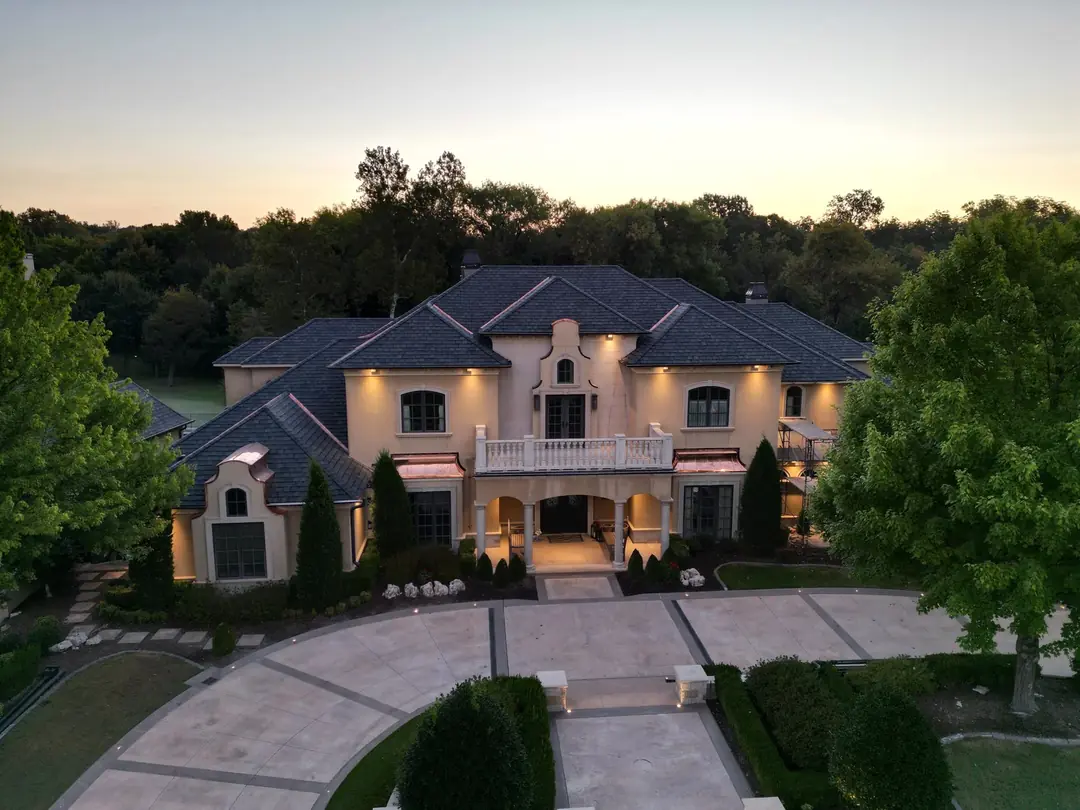
A "high" roof is a different problem. It's a roof that sits above a second story, or one with several levels and tall walls, where a ladder can't reach every part and getting material up takes real equipment. Plenty of homes are both.
Why Steep Roofs Cost More
There's more roof
The steeper the pitch, the more surface sits over the same footprint. That means more shingles, more underlayment and more labor before anyone has even touched a nail:
| Roof pitch | Surface vs. footprint |
|---|---|
| 6/12 (common) | About 12% more |
| 8/12 (steeper) | About 20% more |
| 10/12 (steep) | About 30% more |
| 12/12 (very steep) | About 41% more |
Our guide to roofing squares shows how those multipliers turn into the number of squares on your quote.
Safety gear takes time to set up
On a steep roof, crews work tied off, with anchors, ropes and roof jacks or toe boards to stand on. Setting that up, and moving it as the work progresses, is time on the clock before any shingles go down. That's not padding, it's the price of doing the job without anyone getting hurt.
The work goes slower
Carrying bundles, positioning shingles and fastening them correctly is slower on a steep slope than on a gentle one. The shingles and the nailing pattern are the same. The labor to install them isn't.
Materials and debris are harder to manage
Bundles have to be staged so they don't slide. Old shingles come off a steep roof fast and need to be controlled on the way down, so the drop zone, landscaping and windows are protected. All of that adds steps.
Two-Story and High Roofs
Height adds its own costs, separate from pitch:
- Getting material up. A ladder only works so far. Taller homes often need a lift, conveyor or hoist to move bundles to the roof.
- More distance to cover. Every trip for tools, nails and debris is longer.
- A larger drop zone. Debris falls farther, so more of the yard, driveway and windows need protection.
- Limited access. Tall walls, pools, fences and tight lots can limit where equipment can sit.
Cut-Up Roofs Cost More Too
Valleys, hips, dormers, chimneys and skylights all mean more cutting, more flashing and more waste. A simple roof with a few long planes can lose a small amount of shingle to cuts. A cut-up one can need 15% or more extra material. Steep roofs and cut-up roofs often go together, which is why they tend to get lumped into one charge.
How Much Extra Should You Plan For?
The budget tool on our roof replacement page adds 15 to 30% for a steep or complex roof. Here's what that looks like. If a simple version of your roof would price at $12,000, a steep, tall or cut-up version would land around $13,800 to $15,600.
That's a planning range, not a quote. The real number depends on how steep the roof is, how many levels it has and how cut-up it is. Our city guides for Tulsa, Broken Arrow and Bixby break down the base ranges.
How It Shows Up on a Quote
You'll see it one of three ways:
- As a separate line, such as "steep pitch charge" or "high roof access," often priced per square
- Built into a higher price per square for the whole roof
- Rolled into a single total with no breakdown
Any of the three is fine if it's clear. The problem is when one bidder itemizes it and another leaves it out, and the two totals get compared as if they covered the same work.
What a Low Quote on a Steep Roof Might Be Missing
If your roof is steep or tall and one quote has no mention of it, there are two possibilities. The contractor priced it in without a line item, or they left it out and plan to add it later. A charge that shows up after tear-off is the thing to avoid. Asking up front costs nothing.
Questions to Ask Every Roofer
- How did you measure the pitch, and what is it?
- Is the extra cost for steep or high access included in this price, or separate?
- How many squares is the roof, and how much waste is in that number?
- Will you need a lift or conveyor, and is it included?
- How will you protect landscaping, windows and the driveway?
Ask all of them the same questions. Our guide to reading a roofing estimate covers the rest of the quote.
What This Actually Means for Your Roof
You can't change your roof's pitch, and the extra cost isn't a markup, it's the labor and safety work a steeper or taller roof actually takes. What you can control is whether you pay for it twice. Get the roof measured once, get the steep or high-roof cost in writing, and compare quotes that cover the same squares and the same access.
Frequently Asked Questions About Steep and High Roof Charges
What pitch counts as steep?
There isn't one universal line. Many roofers treat 7/12 or 8/12 and above as steep, and 10/12 and above as very steep.
How much more does a steep roof cost?
For planning, our budget tool adds 15 to 30% for a steep or complex roof. A simple $12,000 roof would run about $13,800 to $15,600 as a steep or cut-up version. The real figure comes from measuring your roof.
Is a two-story roof more expensive to replace?
Often, yes. Material has to be moved higher, debris falls farther and equipment access can be limited. A two-story home can have a smaller roof overall, so the per-square price is higher while the total may not be.
Is a steep roof charge just a way to pad the quote?
It shouldn't be. It covers real costs: extra surface, safety setup, slower work and material handling. It should be explained and tied to your actual roof, not added by default.
Get Your Roof Measured
We measure the pitch, every valley and hip, and the access to each level, then give you an itemized quote you can compare line by line. Book a free inspection. No pitch, just an actual answer.
Related Reading
- What Is a Roofing Square?
- Understanding Roof Pitch
- How to Read a Roofing Estimate
- Roof Replacement Cost in Tulsa
Schedule Your Free Roof Inspection →
Sources and disclaimer. Information in this article comes from RainTech’s own recent projects in the Tulsa metro and published industry data where cited. Prices are ranges, not quotes; your price comes from an inspection and a written proposal. It was current as of October 29, 2026; laws, insurance rules, manufacturer terms and prices change. This article is general information, not legal, insurance, tax or financial advice.


