
Emergency Roof Tarping Services in Tulsa After a Storm
It's 11 PM in May, the tornado siren is finally quiet, and you can hear water dripping in the upstairs bedroom. A branch came through the soffit, a chunk of shingles is in the yard, and tomorrow's forecast shows another round of storms moving in. You're not getting a roof replacement tonight. What you need is a tarp — properly installed, fast — to stop further water damage until the insurance claim and the real repair can happen.
Emergency roof tarping is the unglamorous, time-critical piece of post-storm recovery that most Tulsa homeowners only think about once. Done right, it keeps your home dry, protects your insurance claim, and buys the time needed for proper repair scheduling. Done wrong — or skipped — it costs you thousands in compounding interior damage, sometimes more than the roof itself.
This guide explains when emergency tarping is necessary, what a professional installation looks like, what it costs in Tulsa in 2026, why "mitigation duty" matters for your insurance claim, the documentation that protects your case, and how to find legitimate emergency response (not a storm chaser) in the chaotic hours after an Oklahoma storm.
When Emergency Tarping Is Actually Needed
Not every post-storm roof needs a tarp. Tarping is the right call when:
There's active or imminent water intrusion into the home interior
Visible holes, missing shingles, or exposed decking are present
Additional storms are forecast within the next 24–72 hours
A tree or large debris has impacted the roof
The roof's primary water shedding capability is compromised
Tarping is not needed when:
Damage is cosmetic only (granule loss, dented metal flashings, minor shingle creasing)
The underlayment is intact and shedding water normally
The next dry weather window is several days out and the damage is minor
The way to tell the difference: get a professional roof inspection within 24–48 hours, or do a careful ground-level visual check yourself using our DIY roof inspection checklist. Active leaks inside the home obviously demand tarping. Less obvious damage may or may not — that's what the inspection determines.
Why Tarping Matters for Your Insurance Claim
Here's the part most homeowners don't realize until they're in the middle of a claim dispute: your homeowner's insurance policy has a clause that requires you to take reasonable steps to prevent further damage after a covered loss. This is called your "mitigation duty" or "duty to protect."
In practical terms: if your roof is damaged in a covered storm, and you do nothing for two weeks while rain repeatedly enters your home and destroys drywall, flooring, insulation, and contents, your insurance carrier may deny coverage for the secondary damage.
Their position is that the initial roof damage was covered, but the cascading interior damage was preventable — you had a duty to prevent it and you didn't.
The Insurance Information Institute and National Association of Insurance Commissioners both publish consumer guidance noting that mitigation is a standard policy condition. Oklahoma policies follow this national pattern.
The specific language in your policy will be in the "Duties After Loss" or "Conditions" section — it's worth reading once before storm season so you know exactly what's expected.
Two clear takeaways:
Tarp promptly after a covered loss to stop ongoing damage
Keep receipts and documentation of the tarping work — these are reimbursable through your claim
For broader claim guidance, see our hail damage roof claim in Tulsa guide and the Oklahoma roof insurance deductible explainer.
What a Professional Tarp Installation Actually Looks Like
A proper emergency tarp isn't a blue plastic sheet weighted down with bricks. Done correctly, it's a structured installation designed to remain functional for days to weeks while the claim and repair process moves forward.
The professional installation sequence:
Inspect the damage. Identify the extent of compromised area, edge boundaries, and any structural concerns.
Document with photos and notes. Before tarping, capture the underlying damage so it can be substantiated to the insurance adjuster.
Clear debris. Remove broken branches, loose shingles, and other material that could puncture the tarp.
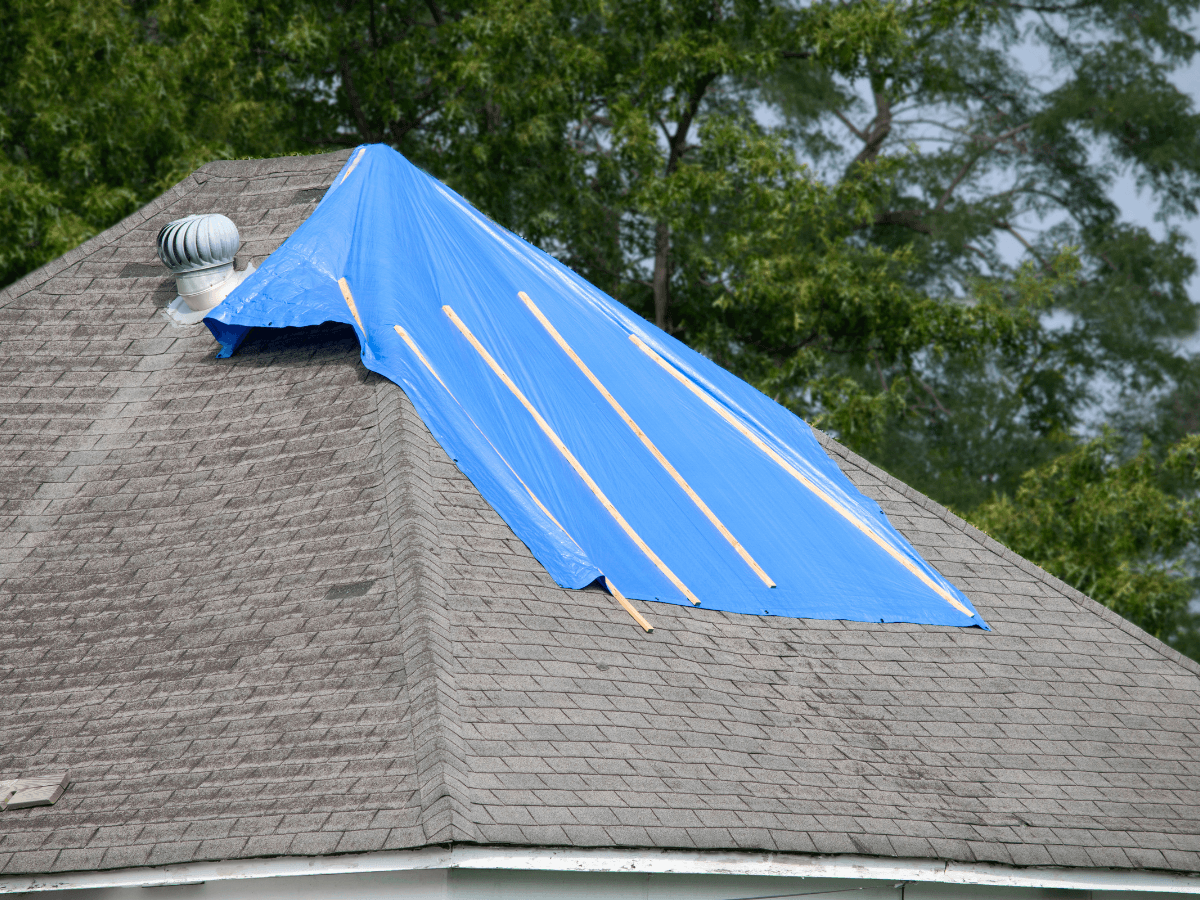
Lay a heavy-duty polyethylene tarp — typically 6 mil minimum thickness, 10 mil for extended exposure, sized to extend 4+ feet beyond the damaged area on all sides.
Wrap the upper edge over the ridge or extend onto the next slope to prevent water from running underneath.
Sandwich tarp edges between furring strips (typically 1x4s) and nail the strip through the tarp into the roof decking. The sandwiching distributes the load across the tarp surface; using nails alone through the tarp fabric tears it within a few hours of wind.
Seal screw and nail penetrations with roofing sealant where appropriate.
Verify the perimeter is fully secured against wind uplift.
Document the completed installation with photos for the claim file.
A properly installed tarp on a Tulsa home can remain functional for several weeks if needed — though most are replaced with permanent repairs within 2–4 weeks of the storm event. For complex damage, multiple tarps may be needed across different roof sections.
The Federal Emergency Management Agency's Operation Blue Roof program has been deployed in past Oklahoma disasters and uses essentially the same installation methodology, demonstrating that this is the recognized standard for emergency stabilization.
What Emergency Tarping Costs in Tulsa (2026)
Pricing varies based on time of day, damage extent, roof complexity, and demand surge after a major storm. Typical 2026 ranges for the Tulsa metro:
Service | Tulsa price range |
Standard single-area tarp (under 300 sq ft) | $400 – $800 |
Larger or multi-section tarp install (300–600 sq ft) | $700 – $1,400 |
Complex multi-tarp install (significant damage) | $1,200 – $2,500+ |
After-hours emergency response surcharge | +$150 – $400 |
Subsequent tarp replacement (if claim extends) | $300 – $600 |
These are nearly always reimbursable through the insurance claim under "mitigation costs" — keep receipts, document with photos, and submit alongside your main claim documentation.
A reasonable framing: a $700 tarp installation that prevents $15,000 in interior water damage is one of the highest-ROI services in homeownership. For the broader claim workflow, see our roof insurance claims service.
Why DIY Tarping Usually Isn't Worth It
Plenty of homeowners have considered tarping their own roofs after a storm. Some have successfully done it. Many more have created additional problems. The honest case against DIY tarping:
1. Roof Access Is Genuinely Dangerous Post-Storm
A wet roof at night, possibly with broken shingles, damaged decking, and unstable debris is not a beginner-friendly environment. The Occupational Safety and Health Administration requires professional roofers to use fall protection equipment for a reason — falls from residential roofs are routinely fatal. Cleaning gutters is one thing; walking a partially destroyed roof in the dark is another.
2. Cheap Tarps Fail Within Days
A standard hardware store blue tarp held down with cinder blocks survives Oklahoma wind for approximately 36 hours. After that, it's flapping loose, has torn around the anchoring points, and is allowing rain in through gaps. The "savings" from a $40 hardware store tarp evaporate when the tarp fails before the storm cycle is over.
3. Improper Installation Damages the Roof Further
Nails driven through tarp into shingles create new leak paths the original storm didn't. We've responded to repair calls where the homeowner's well-intentioned tarp left more nail holes in the deck than the storm caused.
4. Documentation Suffers
A professional installation includes documentation that supports the claim. DIY tarping is rarely documented in a way that helps the insurance adjustment process. You may have done the work, but proving you did it correctly is harder.
5. Insurance Reimbursement May Not Apply
Mitigation reimbursement typically covers professional services with receipts. Materials you bought at Home Depot and installed yourself may or may not be reimbursable, and your time isn't reimbursable at all.
For most Tulsa homeowners after a significant storm, hiring a professional tarp installation is faster, safer, more durable, and ultimately cheaper than DIY.
Finding Legitimate Emergency Tarp Service (Without Hiring a Scammer)
Storm chasers know that homeowners are vulnerable in the hours and days after a major Tulsa storm. The door-to-door pitches for "free tarping" or "we'll tarp tonight and start work tomorrow" often come from contractors who'll disappear with your deposit. We covered the broader pattern in our storm chaser red flags article.
The same red flags apply to emergency tarping:
Unsolicited door knocks within hours of the storm
High-pressure sales tactics
Out-of-state license plates on the trucks
Demand for immediate signing of full roof contracts before they'll tarp
A legitimate emergency tarp service:
Responds to your call — you find them, they don't find you
Provides clear pricing before starting work
Tarps without requiring a full reroof contract as a precondition
Provides a written invoice with the company's full information
Is a local Tulsa-area business with verifiable references
The right sequence after a storm:
Stop active water intrusion with interior buckets, plastic sheeting, or whatever's available
Move belongings away from areas of active leak
Call a local, verified Tulsa-area roofer for emergency tarping — not the first contractor who knocks on your door
Document everything with photos and receipts
Call your insurance carrier to open the claim
Schedule the proper repair through your insurance claim process once you've had time to vet contractors
If your home is in active water intrusion at 11 PM, calling a local roofer with a 24/7 emergency line is appropriate — but signing anything beyond a tarp service should wait until daylight.
Documentation: The Step Most Homeowners Skip
The single most important non-physical part of emergency tarping is documentation. The photos and records you collect in the first 24 hours after a storm become the backbone of your insurance claim.
What to document:
Before tarping:
Wide-angle photos of each side of the home showing damage extent
Close-up photos of specific damage points (missing shingles, holes, debris impact areas)
Photos of any debris in the yard — branches, shingle pieces, granule accumulation
Photos of interior damage — water stains, fallen debris, soaked carpets, damaged ceilings
Date and time stamps on every photo (most phone cameras embed this automatically)
During and after tarping:
Photos of the tarping work in progress
Photos of the completed tarp installation
Receipt or invoice from the tarping service
Notes on damage observations that may not be visible in photos
Ongoing:
Photos of any additional damage that develops despite tarping
Documentation of any tarp replacements if the claim extends
Records of any related expenses — temporary lodging, contents protection, etc.
Save all of this to cloud storage or email it to yourself — phones get lost or damaged during stressful events. Our spot roof damage after Tulsa storm guide covers what specific damage patterns to look for and capture.
How Long a Tarp Can Stay in Place
Properly installed tarps are intended as temporary solutions. The realistic durability picture:
6 mil polyethylene tarps: 1–3 weeks of reliable service in Oklahoma weather
10 mil heavy-duty tarps: 3–8 weeks of service
Industrial reinforced tarps: 2–3 months of service
After these windows, UV degradation, wind cycling, and material fatigue begin to compromise the tarp's effectiveness. If your insurance claim is taking longer than expected to resolve, plan on tarp replacement rather than hoping the original installation holds.
Common reasons claims take longer than expected:
Adjuster scheduling delays — after a major storm, adjusters are overwhelmed
Insurance company supplements — additional inspections for added damage
Contractor scheduling — high demand after major storms
Material availability — surge demand can delay specific roof products
A good Tulsa roofing contractor monitors active tarps under their care and proactively replaces them before failure. Our roof leak repair work in Glenpool and similar service areas often includes tarp maintenance as part of extended claim work.
What Comes Next: From Tarp to Permanent Repair
The tarp is a bridge, not a destination. Here's how the timeline typically flows:
Day 0 (Storm event): Storm damages roof. You shelter, then assess damage when safe.
Days 1–2: Emergency tarp installed. Insurance claim opened. Photos and documentation captured.
Days 3–10: Insurance adjuster inspection. Initial estimate generated. You begin getting contractor estimates.
Days 7–21: You select a contractor. Detailed estimate finalized. Material orders placed.
Days 14–45: Permanent reroof completed (timeline varies widely based on demand and material availability).
Final week: Final inspection, recoverable depreciation released, claim closed.
The whole process typically takes 4–8 weeks for a straightforward claim. Severe storms with widespread damage can extend this to 3–6 months due to industry-wide contractor and material backlogs.
During the entire window between the tarp and permanent repair, the tarp is your only protection. Take care of it: don't walk on it unnecessarily, don't add objects to it, and have it replaced before it fails.
Frequently Asked Questions
Will my insurance pay for emergency tarping?
Almost always, yes — under the mitigation provisions of standard homeowner's policies. Keep receipts and document the work.
How quickly can a Tulsa roofer tarp my house?
Reputable local contractors typically respond within 2–6 hours during business hours and 4–12 hours after-hours, though response times stretch significantly after major widespread events.
Can I tarp my roof myself in an emergency?
You can, but it's dangerous and often produces inferior results. If you must DIY, work in daylight only, use proper fall protection, and consider the documentation/reimbursement implications.
What if my roof keeps leaking through the tarp?
Call the contractor who installed it. A properly installed tarp shouldn't leak — if it is, the installation has a problem that needs addressing immediately.
Do I need a tarp if there's no visible interior leak?
Sometimes yes — if exterior damage compromises the roof's primary water shedding capability, water will eventually find its way inside even without obvious initial leaks. A professional inspection determines the right call.
Can I get a tarp installed before filing my insurance claim?
Yes, and you should if water intrusion is active. Mitigation expenses are reimbursable regardless of when the claim was officially opened.
Will a tarp damage my roof?
A poorly-installed tarp can. A properly-installed professional tarp is designed to be removed without damage to the underlying roof structure.
How is tarping different from a "temporary repair"?
Tarping is a stabilization measure to prevent further damage. A temporary repair is a more substantial intervention — replacing a specific area of damaged shingles, patching specific holes, etc. — that may or may not require tarping in combination.
Bottom Line
Emergency roof tarping in Tulsa is one of the most time-critical, high-value services in residential roofing. A properly installed tarp by a verified local contractor protects your home, satisfies your insurance policy's mitigation duty, and buys the time needed for a proper claim and repair.
The wrong call — DIY tarping with hardware-store materials, or letting a storm chaser tarp your house in exchange for signing a roof contract — creates more problems than it solves.
If your home has been damaged in a recent Tulsa storm and you need fast, properly documented emergency tarping followed by a complete claim-friendly reroof, the RainTech residential team handles emergency response and full claim work across the metro — Tulsa, Bixby, Broken Arrow, Owasso, Jenks, and the surrounding communities.