
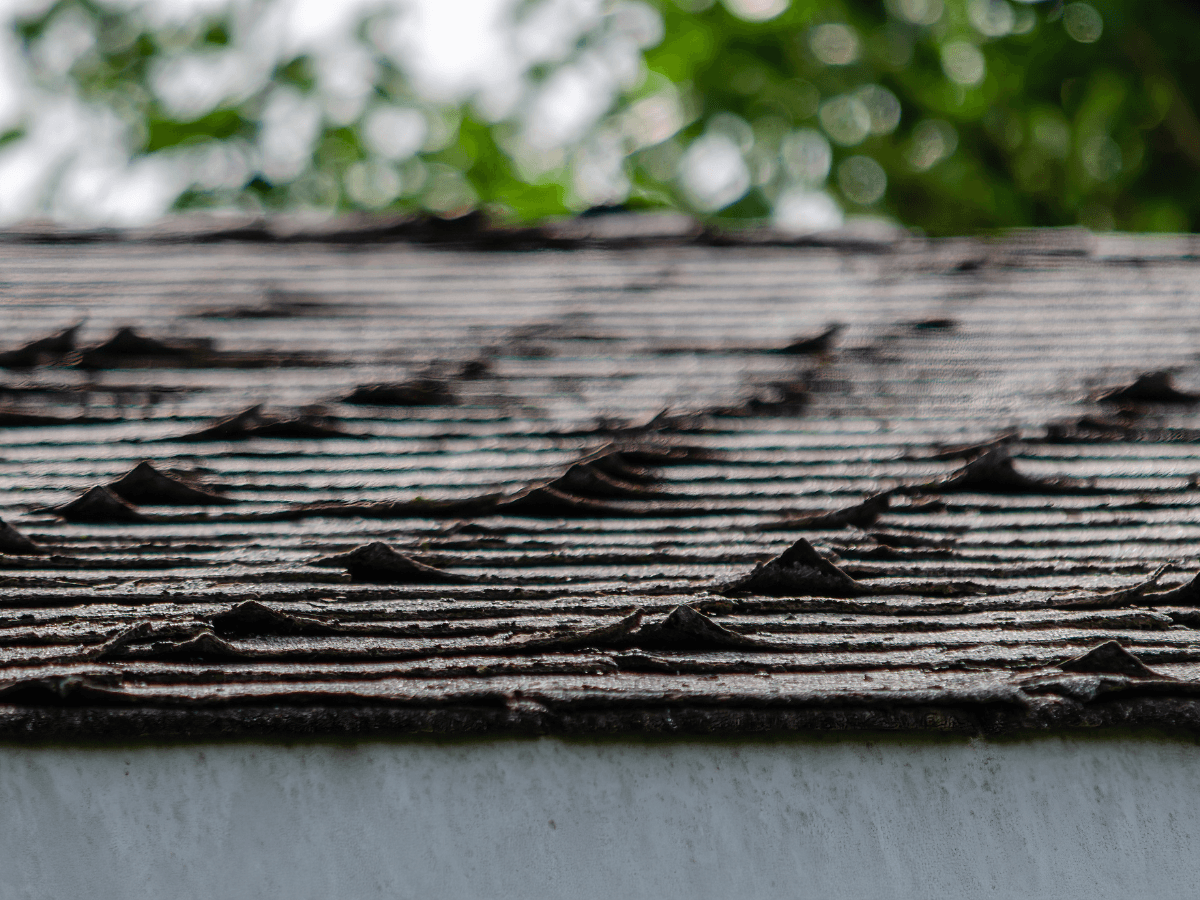
Asphalt Shingle Heat Damage: Oklahoma Summer Survival
Asphalt is, at its core, a thermoplastic — a material designed to soften with heat and stiffen as it cools. In moderate climates, that property is a feature: it allows shingles to self-seal in moderate sun and stay flexible enough to handle wind. In Oklahoma summers, it becomes a liability.
Surface temperatures on dark asphalt roofs routinely hit 150°F in normal conditions and 175°F+ during heat events. At those temperatures, the same property that helps shingles bond also causes them to soften past design tolerance, blister, crack, and age faster than the manufacturer's projected service life.
Asphalt shingle heat damage isn't a single dramatic failure — it's a cumulative aging process that quietly shortens the useful life of every asphalt roof in the Tulsa metro. Most homeowners never see it explicitly because it happens slowly and on parts of the roof they can't see from the ground. But it's the dominant reason that Oklahoma roofs typically don't reach the 30-year lifespans the warranties advertise.
This guide explains exactly what summer heat does to asphalt shingles at the chemical and physical level, the visible signs to look for, why some shingles fail faster than others, what attic ventilation does (and doesn't) prevent, and the practical strategies that meaningfully extend shingle life in the Oklahoma climate.
How Asphalt Shingles Actually Work
Before getting into heat damage, a quick refresher on the structure of a typical asphalt shingle:
Fiberglass mat (the core) — provides tensile strength and dimensional stability
Asphalt coating — the waterproofing layer, top and bottom of the mat
Granules — ceramic-coated mineral granules embedded in the top asphalt; provide UV protection and color
Self-sealing adhesive strip — a strip of asphalt that bonds each shingle to the one above when activated by heat
Backing material — typically fine mineral powder or sand to prevent shingles from sticking together in storage
Quality varies by product line and manufacturer, but the basic architecture is consistent across nearly all asphalt shingles sold in 2026.
The granules are the critical layer for heat protection. They reflect a portion of solar radiation and shield the asphalt below from direct UV degradation. As granules are lost — to weathering, hail, foot traffic, or aging — more asphalt is exposed to sun, and heat damage accelerates dramatically.
For more on shingle structure and the whole roof system, see our anatomy of a roof guide.
How Heat Specifically Damages Shingles
Several distinct heat-related damage mechanisms affect asphalt shingles, often happening simultaneously:
1. Thermal Cycling Fatigue
Every day in an Oklahoma summer, your shingles heat from morning temperature (perhaps 75°F at dawn) to peak afternoon temperature (often 150–170°F on the shingle surface) and back. Each cycle:
Expands the asphalt slightly
Contracts it as it cools
Stresses the bonds between shingle layers
Stresses the bonds at sealing strips and overlaps
Stresses the integration between asphalt and granules
Over hundreds of cycles per summer and thousands over a roof's life, this cycling fatigues every joint and bond. It's the dominant aging mechanism in hot climates.
2. Asphalt Softening and Plasticity
At sustained temperatures above 140–150°F, asphalt begins to soften past its design range. The shingles become:
Plastic rather than firm — easily damaged by foot traffic, hail, or wind impact
Susceptible to granule embedding — granules can sink into the softened asphalt
Subject to sealant migration — the bonding strips can flow slightly out of position
Prone to deformation — sustained sagging in unsupported areas
This is why reputable Tulsa roofers schedule major work for early morning, late afternoon, or cooler periods. Walking on softened shingles damages them mechanically.
3. Blistering
Blisters are raised bumps on the shingle surface, typically 1/4 to 1 inch across. They develop when:
Moisture trapped within the shingle vaporizes during extreme heat and expands
Volatile components in the asphalt off-gas during heat
Bond failures between shingle layers allow gases to accumulate
Blisters typically appear in random distribution across heat-exposed slopes. Initially, they may be subtle — only visible under close inspection. As they develop further, they crack open and expose the asphalt mat below.
Once blisters open, they become entry points for additional UV damage, water intrusion, and accelerated granule loss. A roof with widespread blistering is typically within a few years of needing replacement.
4. Granule Loss
Heat doesn't directly remove granules, but it weakens the bonds that hold them in place. As asphalt softens, the embedding around each granule becomes less stable. Subsequent weather events — rain, hail, wind — wash or knock granules away that were previously secure.
Granule loss accelerates aging because:
Underlying asphalt is exposed to UV
UV degradation accelerates further
The shingle's protective surface compromises further
More granules are lost in subsequent events
Our granule loss article — coming soon to the blog — covers what's normal vs. concerning.
5. Cracking
Eventually, the cumulative damage from cycling, softening, and granule loss leads to visible cracking. Initial cracks are typically:
Hairline cracks running parallel to the shingle's bottom edge
Cracks at exposed corners where stress concentrates
Cracks in the sealant strips themselves
Once cracking appears, the shingles' waterproofing capability is compromised. Even if no leaks have appeared yet, the timeline to leak failure has shortened substantially.
6. Curling and Cupping
Two related but distinct phenomena:
Curling — shingle edges lift upward away from the roof
Cupping — shingles bow upward in the center while edges stay down
Both result from differential aging — the top surface of the shingle ages faster (more sun exposure) than the underside, causing the material to contract differently top-vs-bottom. Curled or cupped shingles expose the underlying roof to wind uplift and water intrusion.
Why Some Shingles Survive Better Than Others
Not all asphalt shingles age at the same rate in heat. Several factors meaningfully affect heat resilience:
Shingle Class
3-tab shingles (oldest design, thinnest profile) — least heat-resistant; typically 15–20 year service life in Oklahoma
Architectural/dimensional shingles (thicker, multi-layer) — better heat tolerance; 20–25 year service life
Premium designer shingles — best heat tolerance among asphalt; 25–30 year service life
Impact-resistant shingles (Class 4) — polymer modifications also help with heat; 25–30+ year service life
The architectural vs. 3-tab comparison is large enough that we have a dedicated article on architectural vs 3-tab shingles for Tulsa.
Color
Darker shingles run hotter than lighter ones. The thermal difference can be substantial — 20–30°F between a black and a light gray shingle in identical conditions. Heat-related aging follows the temperature difference.
Our best roof colors for Oklahoma homes guide covers the trade-offs between color choice, energy efficiency, and resale value.
Algae-Resistance Granules
Shingles with copper-coated granules (StainGuard, StreakFighter, etc.) resist algae growth — which is good because algae growth itself accelerates heat damage by trapping moisture against shingles.
Slope Direction
The slope of your roof matters more than most homeowners realize. South and west-facing slopes:
Receive more direct sun (in the Northern Hemisphere)
Reach higher peak temperatures
Stay hot longer in afternoon
Age faster than north and east-facing slopes
You can often see this directly: on a 20-year-old asphalt roof, the south-facing slope typically looks substantially more aged than the north-facing slope. Sometimes it's so different that the south slope needs replacement years before the north slope.
Attic Ventilation
This is the big one. Poorly ventilated attics keep heat trapped against the underside of the shingles, essentially baking them from below. A properly ventilated attic:
Allows hot air to exhaust through ridge vents and roof vents
Allows cooler air to enter through soffit vents
Reduces decking and shingle temperatures by 20–40°F
Extends shingle life by 5–10+ years on heat-stressed climates
Our Tulsa attic ventilation guide covers ventilation requirements and how to assess your current system.
Underlayment Quality
Modern synthetic underlayments have better thermal properties than traditional felt — they don't soften in heat, don't trap moisture, and don't degrade as quickly. Our synthetic vs felt underlayment article covers the comparison in detail.
What Heat-Damaged Shingles Look Like
Knowing what to look for from the ground (with binoculars — don't climb on the roof):
Early Heat Damage Signs
Subtle differences in appearance between slope directions
Lighter areas on south and west-facing slopes (early granule loss)
Granule accumulation in gutters during routine cleaning
Hairline crack patterns in close-up inspection
Slight surface "shine" in patches where granules are sparse
Moderate Heat Damage Signs
Visible curl at shingle edges on heat-exposed slopes
Distinct blister patterns — small raised bumps in random distribution
Color fade more pronounced on south and west slopes
Sealant tab failures — shingles that have lifted because the seal failed
Severe Heat Damage Signs
Widespread cupping — shingles bowed upward in the center
Cracking visible across multiple areas
Exposed asphalt mat where granules have been lost
Active leaks during rainfall
Visible sagging in unsupported areas
A roof showing severe heat damage signs is at or near end of service life. A roof with moderate signs has a few years of remaining life but is approaching replacement. A roof with only early signs has years of useful service if other factors are reasonable.
For the broader inspection framework, see our DIY roof inspection checklist for Tulsa.
How Insurance Treats Heat Damage
A reality check: heat-related shingle damage is essentially never covered by homeowner's insurance.
Wear and tear exclusions in standard policies cover heat-related aging
Cosmetic damage (blistering without active leaks) is not a covered loss
Hail or wind damage that happens to a heat-aged roof is covered, but the aging itself is not
Manufacturer warranty coverage for heat damage is similarly limited — warranties cover defects, not heat-aging
The implication: heat damage prevention and management is essentially the homeowner's responsibility. The cost of a roof aged out 5 years early by heat damage is an out-of-pocket cost, not an insurance claim.
For broader insurance navigation, see our Oklahoma roof insurance deductible explainer and the hail damage claim guide.
Strategies to Extend Shingle Life in Oklahoma Heat
The good news is that several proven strategies meaningfully reduce heat damage:
Choose Better Shingles Initially
The single biggest decision happens at installation. Choosing architectural or impact-resistant shingles over basic 3-tab adds 5–10+ years of expected service life. The cost difference is meaningful but pays back through delayed replacement. Our best roofing materials for Tulsa homes guide covers material selection in depth.
Optimize Attic Ventilation
If your attic is undersized for ventilation (very common in homes built before 2000), upgrading the ventilation system is one of the highest-ROI roof improvements available. Add ridge vents, ensure soffit intake is unobstructed, consider powered or solar attic fans. The temperature reduction in your attic translates directly to longer shingle life.
Choose Lighter Colors
The thermal difference between dark and light shingles is real. If you're replacing a roof in Oklahoma and don't have a strong color requirement (HOA, architectural style, etc.), lighter colors substantially reduce heat damage.
Add Radiant Barriers
Reflective foil on the underside of roof decking reflects radiant heat back up before it warms the attic. Particularly effective in extreme heat climates.
Improve Attic Insulation
Better insulation slows heat transfer from the attic into conditioned space — making the AC work less, reducing energy costs, and providing some indirect benefit to the roof system through reduced air exchange. Our attic insulation R-values guide covers the recommended levels for Oklahoma.
Maintain Algae-Free Surfaces
Algae and biological growth trap moisture against shingles, accelerating heat-related decline. Periodic roof cleaning and zinc strip installation helps maintain shingle health.
Schedule Inspections Strategically
A professional inspection every 2–3 years catches heat damage early when intervention can still help. Catching blistering early may not save the affected shingles but informs replacement timing planning.
Consider Metal as the Long-Term Answer
For homeowners committed to long ownership, a metal roof sidesteps most of the heat damage discussion entirely. Metal doesn't soften, doesn't blister, doesn't crack from thermal cycling at the same rate, and lasts 40–70 years.
When Is Heat-Damaged Shingle Replacement Appropriate?
The decision threshold:
Consider replacement when:
Shingles show widespread blistering across multiple slopes
Active leaks have appeared in recent storms
Cupping or curling is visible from the ground on multiple slopes
The roof is at or past its expected service life
An insurance claim or repair finds multiple problems concentrated in heat-affected areas
Repair may still be appropriate when:
Damage is limited to one slope or section
The rest of the roof is in good condition
Service life remaining justifies the repair cost
A planned replacement is several years away
The difference between repair and replacement decisions is covered in our broader roof repair vs. replacement guide for Bixby, which applies across the Tulsa metro.
Frequently Asked Questions
Can I just replace the south-facing slope and leave the rest?
Sometimes — though this creates color-matching issues if the existing roof has aged significantly. A "tear-off one slope only" approach is more common in commercial work than residential.
How does heat damage compare to hail damage in cost impact?
On a per-event basis, hail dominates. But across a typical Oklahoma roof's life, cumulative heat damage often costs more in shortened lifespan than hail does in claim deductibles. Both matter.
Will newer shingles handle heat better than my old ones?
Yes — current generation architectural shingles include polymer modifications and improved manufacturing that produce better heat resistance than 1990s and early 2000s products.
Can I do anything during a hot summer to protect my roof?
Make sure ventilation systems are working, don't add additional weight or stress, defer non-emergency work to cooler periods, and address any algae growth that traps moisture.
Why does my south-facing slope look so much worse than my north slope?
Sun exposure. South-facing slopes (in the Northern Hemisphere) receive substantially more direct radiation and reach higher temperatures.
Are cool roof shingles available?
Some manufacturers offer ENERGY STAR-rated cool roof products with higher solar reflectance. Selection is limited in asphalt — metal and tile offer better cool-roof options.
Will a roof coating help with heat damage on shingles?
Specialty reflective coatings exist but generally aren't recommended for residential asphalt roofs — they can affect granule retention, void manufacturer warranties, and create more problems than they solve. Coatings are primarily a commercial roof restoration product.
How much does upgrading attic ventilation typically cost?
Adding ridge vents and verifying soffit intake on a typical Tulsa home runs $500–$1,500. Adding powered attic fans adds $500–$1,500. The ROI through shingle life extension is substantial.
Bottom Line
Asphalt shingle heat damage in Oklahoma is the slow, cumulative aging that shortens most roofs' useful life by years compared to the manufacturer's projected service life. It's not as dramatic as hail damage, not as visible as wind damage — but on a 20+ year time horizon, it's often the dominant aging mechanism.
The strategies that meaningfully address it — better shingle selection, proper attic ventilation, lighter colors, and ongoing maintenance — are well-established and pay back through extended roof life.
If you're noticing visible heat damage signs on your Tulsa roof, planning improvements specifically to address heat-related aging, or considering a reroof with better heat-resilient materials, the RainTech residential team handles inspections, ventilation improvements, and full reroofs with heat-tolerant products across the Tulsa metro.