
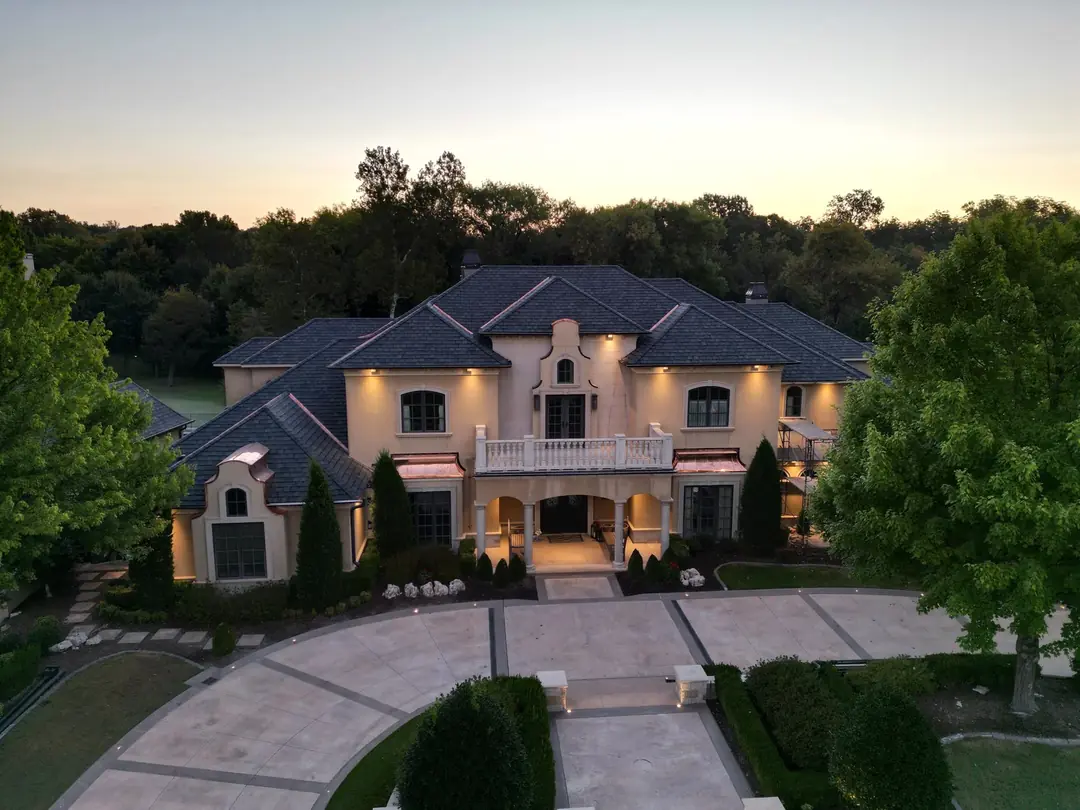
Best Roof Colors for Oklahoma Homes (Resale + Energy)
How to pick a roof color for an Oklahoma home: heat and energy, resale appeal, matching brick and siding, popular manufacturer colors, and a no-regret process.

The short answer: In Oklahoma, lighter roof colors such as light gray, weathered wood and tan run cooler and are easier on attic temperatures and shingles, while neutral grays, charcoals and browns sell best. Pick a color that complements your brick or siding, look at full-size samples and real houses in daylight, and remember nearly every popular color comes in a Class 4 impact-resistant version.
In this guide 12 sections
- Why Roof Color Matters More Than People Think
- The Top Three Roof Color Categories in Tulsa Right Now
- What Energy Considerations Actually Look Like
- Resale Value Considerations
- Matching to Brick, Siding, and Architectural Style
- Color and Insurance: A Note
- What Each Major Manufacturer’s Most Popular Tulsa Colors Look Like
- How to Pick Without Regret: A Practical Process
- Energy Tip for Oklahoma Specifically
- What to Avoid
- Frequently Asked Questions About Roof Colors
- Get a Free Quote with Color Samples
Picking a roof color isn’t a decision most people enjoy. It’s permanent for 25+ years, it’s expensive to change your mind on, your spouse has opinions, your HOA has opinions, and somehow there are 47 shades of brown that all look the same on a 2-inch sample but completely different on an actual house in Owasso.
We’ve been doing roofs in the Tulsa metro long enough to have watched color trends come and go, and to have seen real-world energy bills, resale prices, and insurance experiences correlate with shingle color.
So, this guide isn’t just “here are pretty colors.” It’s a practical look at which best roof colors for Oklahoma homes actually perform, for energy bills, for resale, and for matching the architectural style of homes here.
Why Roof Color Matters More Than People Think
Roof color affects three things in measurable ways:
- Attic and home temperatures during Oklahoma’s brutal summers
- Energy costs for cooling
- Resale value and curb appeal
A darker roof in Tulsa can run 25 to 40°F hotter than a lighter roof on the same day in July. That heat doesn’t stay on the roof. It radiates into the attic and, depending on insulation and ventilation, into the living space.
Good attic ventilation mitigates this, but doesn’t eliminate it.
The color you pick also locks in the visual identity of your home for the next two and a half decades. That’s worth thinking carefully about.
The Top Three Roof Color Categories in Tulsa Right Now
Before getting into specific color picks, here’s what we see installed across the metro in 2026:
- Charcoal / dark gray: by far the most common, roughly 35 to 45% of installs
- Weathered wood / brown blends: second most common, ~25%
- Driftwood / mid-gray blends: growing fast, ~20%
- Estate gray / lighter blends: ~10%
- Black: pure black is rarer, ~5 to 8%
- Other (slate, hunter green, terracotta, etc.): niche, varies by neighborhood
The big shift we’ve seen since the early 2010s: weathered wood/brown blends used to dominate, especially in suburbs like Bixby and Jenks.
Today, charcoal and gray blends have taken over because they pair better with the painted brick, board-and-batten, and modern farmhouse styles that have come to define newer subdivisions.
What Energy Considerations Actually Look Like
Here’s the honest version of the energy story: roof color matters, but it’s not the biggest variable in your cooling bill. Insulation, ventilation, windows, and shading all matter more than shingle color in most homes.
That said, the Cool Roof Rating Council publishes solar reflectance and emissivity values for hundreds of shingle products, and the differences are real:
- Standard dark shingles (charcoal, black): Solar reflectance around 0.05 to 0.08
- Standard medium shingles (weathered wood, gray): Solar reflectance around 0.08 to 0.15
- Standard light shingles (estate gray, almond): Solar reflectance around 0.15 to 0.25
- “Cool” reflective shingles (specifically engineered): Solar reflectance up to 0.40+
In Oklahoma’s climate, going from a 0.05 reflectance shingle to a 0.25 reflectance shingle can reduce attic peak temperatures by 15 to 25°F on a hot afternoon and trim summer cooling costs by an estimated 5 to 12% on homes with average insulation. Going further to a true cool roof shingle can push savings to 10 to 20%.
So, if cooling costs are top of mind, shingle color does move the needle, just not as much as new windows or upgraded insulation would.
Resale Value Considerations
Here’s where roof color gets tricky. Some colors help resale; others don’t hurt; a few actively hurt.
Colors that help resale in Tulsa:
- Charcoal / dark gray (currently the most “current” look)
- Weathered wood blends with grays mixed in
- Driftwood / mid-gray with subtle warmth
- Estate gray (especially on lighter-painted homes)
These are the colors most current buyers expect to see when they pull up to a home. They feel modern, they pair with current paint colors, and they don’t make the home read as dated.
Colors that are neutral for resale:
- Pure brown weathered wood (depending on the home’s brick/siding)
- Black (slightly polarizing but not negative)
- Slate/blue-gray (works on traditional homes, neutral elsewhere)
Colors that often hurt resale:
- Bright reds, blues, or greens unless the home’s architecture demands it
- Heavy beige/almond on homes that aren’t traditional Spanish/stucco
- Patchwork or mismatched colors (different colors on different slopes)
- “Trendy” specialty colors that date a home
The principle: pick a color that looks current today but won’t read as dated in 15 years. The classic neutrals (charcoal, weathered wood, driftwood, gray blends) tend to age well.
Matching to Brick, Siding, and Architectural Style
The single biggest mistake homeowners make in roof color selection is treating the roof in isolation, without considering the rest of the exterior. The roof should harmonize with, not match exactly, but harmonize with, the home’s brick, siding, trim, and overall style.
A few rules of thumb that work well in Oklahoma:
Red brick homes (very common in Tulsa)
Red brick warms up under hot light, and a roof that fights that warmth (cool blues, bright grays) often looks off. Better choices:
- Weathered wood / brown blends with subtle gray
- Dark charcoal (provides contrast without fighting the brick)
- Estate gray (on lighter red brick especially)
Beige or tan brick
These pair well with most roof colors but particularly:
- Dark charcoal (creates strong contrast)
- Driftwood blends
- Weathered wood
White or light-painted brick (very current trend)
White-painted brick has exploded in popularity in Tulsa neighborhoods like Brookside and parts of Maple Ridge over the last 5 years. It pairs cleanly with:
- Black or near-black shingles
- Charcoal
- Slate gray
Modern farmhouse / board-and-batten
The dominant new-construction style in suburbs like Stone Canyon and Coffee Creek. Best paired with:
- Black or charcoal
- Estate gray (lighter homes)
- Slate
Spanish/Mediterranean (rare but present in older South Tulsa)
These call for tile or terracotta, not architectural asphalt. If you’re working on a Spanish-style home and considering a non-tile alternative, talk to a designer first.
Color and Insurance: A Note
Roof color, in itself, doesn’t directly affect your insurance premium. What does affect your premium is the impact rating of the shingle (Class 4 vs standard) and the wind rating. Color is independent of those factors. You can get Class 4 shingles in basically any color the manufacturer offers.
If you’re considering Class 4 impact-resistant shingles for the insurance discount, you don’t have to compromise on color. The major manufacturers make Class 4 versions of nearly every popular color in their lines.
What Each Major Manufacturer’s Most Popular Tulsa Colors Look Like
Based on what we install across the metro, here are the typical color picks by manufacturer:
GAF Timberline HDZ
- Charcoal: by far the #1 pick
- Weathered Wood: strong second
- Pewter Gray: gaining ground
- Hickory: for warmer-tone homes
- Slate: clean, modern look
Owens Corning Duration
- Onyx Black: the popular bold choice
- Driftwood: most balanced/safe pick
- Estate Gray: lighter modern look
- Brownwood: for traditional homes
- Quarry Gray: current “modern farmhouse” favorite
CertainTeed Landmark
- Moire Black: clean dark option
- Weathered Wood: classic
- Heather Blend: for craftsman/older homes
- Resawn Shake: adds visual texture
If you want a fuller breakdown of the manufacturer-specific options, our best asphalt shingles for Owasso homeowners guide goes deeper on product lines.
How to Pick Without Regret: A Practical Process
Here’s the process we walk customers through:
Step 1: Look at the home in different lights
Take photos of your home in early morning, midday, late afternoon, and overcast conditions. A roof color reads differently across all of those, and you want one that works in every light.
Step 2: Drive your neighborhood
Find homes in your area with similar architecture and brick/siding tones. Note which roof colors look right and which look wrong. Take photos. Pattern-match honestly. What works on a similar home will probably work on yours.
Step 3: Get full-size sample boards, not chips
A 2-inch sample chip lies. A full-size shingle sample (12" x 36" minimum) tells the truth. Reputable Tulsa roofers will leave full sample boards with you for a few days. Hold them up against the brick and siding in different lights.
Step 4: Use manufacturer visualizers
Most manufacturers (GAF, Owens Corning, CertainTeed) have online tools where you upload a photo of your home and overlay different shingle colors. They’re imperfect but they catch obvious mismatches.
Step 5: Get a second opinion you trust
Ideally, ask a friend or family member with good design taste, not just the contractor. The contractor’s opinion has commercial pressure baked in. A neutral second opinion catches blind spots.
Step 6: Sleep on it
The biggest source of color regret is rushed decisions during the contract-signing stage. Most contractors will hold a quote for 30 days. Use that time. Walk past your home a hundred times with the sample propped up. Don’t pick under pressure.
Energy Tip for Oklahoma Specifically
If you’re choosing between a darker and lighter version of the same shingle line and energy efficiency is a tiebreaker, go lighter. Oklahoma summers are long and hot, our cooling load dwarfs our heating load, and a slightly cooler roof saves real money over 25 years.
The exception: if your home has very dark trim or very dark siding and a darker roof creates better visual harmony, the energy difference (typically 5 to 10% of summer cooling cost) is small enough that aesthetic considerations can win.
What to Avoid
A few common color mistakes we see in Tulsa:
- Picking a color that fights the brick. Cool blue-gray on red brick. Warm brown on cool gray brick. These mismatches stand out to buyers and look “off” without people knowing why.
- Ultra-dark on under-ventilated attics. A black roof on a poorly ventilated attic in Oklahoma can cook shingles from underneath and shorten the roof’s life by 5+ years.
- Bold colors driven by a single inspiration photo. A bold green roof might look great in a Pinterest photo from Vermont. On a Tulsa ranch, it might look out of place.
- Different colors on different slopes. Always go uniform unless you’re working on a specifically designed multi-color architectural feature.
Frequently Asked Questions About Roof Colors
What roof color is best for Oklahoma heat?
Lighter colors such as light gray, weathered wood or tan reflect more sun and run cooler than black or dark charcoal, which helps attic temperatures and shingle life.
Do roof colors affect resale value?
Yes. Neutral grays, charcoals and browns that complement the brick or siding appeal to the most buyers in the Tulsa market.
Can I get Class 4 shingles in any color?
Nearly all popular colors come in Class 4 impact-resistant versions from the major manufacturers.
Get a Free Quote with Color Samples
If you’re starting to plan a roof replacement and want to see physical samples in your driveway, against your home, in real Tulsa light: schedule a free roof inspection with our team.
We’ll bring full-size sample boards in your top 3-5 candidate colors, walk through how each pairs with your home, and let you take all the time you need to decide.
We’ve helped hundreds of Tulsa-area homeowners pick a color they’re still happy with 15 years later. Color is one of the most personal parts of the roofing process. We’re here to help you get it right, not to push you into the first decent option.
Schedule Your Free Tulsa Roof Inspection →
Sources and disclaimer. Information in this article comes from manufacturer documentation for the products named and RainTech’s own installation experience in Oklahoma. It was current as of September 24, 2026; laws, insurance rules, manufacturer terms and prices change. This article is general information, not legal, insurance, tax or financial advice.


