
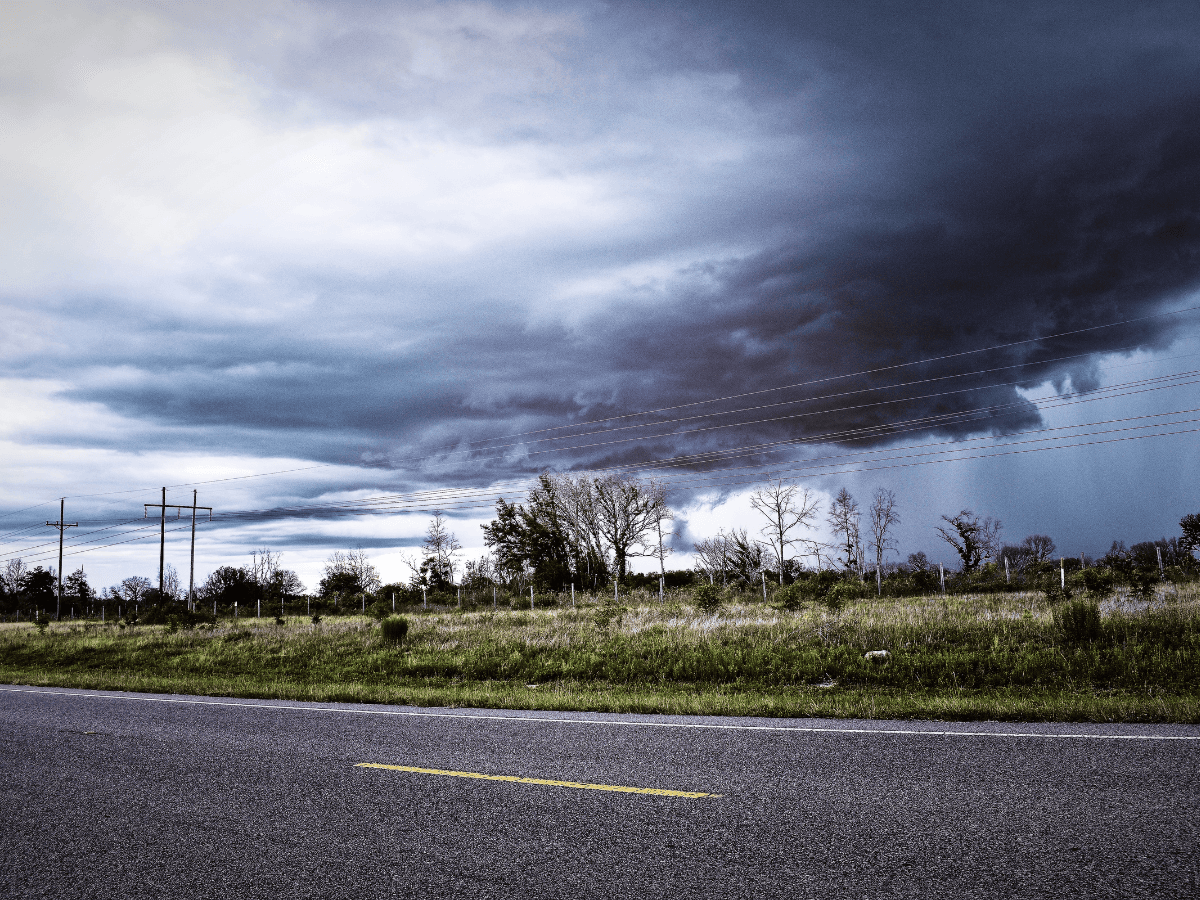
Storm Chaser Red Flags: How to Avoid Roofing Scams in Tulsa
The first knock usually comes within 48 hours of a major hailstorm rolling through the Tulsa metro. A guy in a polo shirt with a clipboard says he was "in the neighborhood" doing roof inspections, noticed your shingles look damaged, and can have a crew out tomorrow. Maybe he mentions your insurance will cover everything. Maybe he offers to "eat your deductible" or hands you a flyer with a brand-new email address and a phone number that goes to voicemail.
That's a storm chaser. And after every significant Oklahoma hail event, hundreds of them descend on the Tulsa metro for 90 to 120 days, sign up homeowners as fast as they can, collect insurance proceeds, and disappear — sometimes after doing the work poorly, sometimes after not doing the work at all. The Better Business Bureau ranks home-improvement scams among the top complaint categories nationwide, and roofing storm chasers are one of the most reliable subcategories.
This guide explains what storm chasers are, how the scam usually works, the specific red flags that should make you close the door, the questions that send legitimate contractors past a quick sniff test, and how to protect yourself if you've already signed something you're regretting.
What a Storm Chaser Actually Is
The term gets used loosely. Technically, a storm chaser is a roofing contractor — often from another state — who follows hail and wind events from market to market, sets up temporary operations, harvests as many roofing contracts as possible, executes the work (or outsources it), and moves on to the next storm.
Not every storm chaser is a scammer. Some are legitimate companies with mobile crews who happen to operate this way. But the structural problem is the same regardless of intent: a contractor who isn't going to be in your area in 18 months can't honor a workmanship warranty, can't come back if your roof leaks, and isn't accountable to a local reputation. That asymmetry is what enables the scams.
The scams themselves vary, but the most common patterns we see in Tulsa after major hailstorms include:
Take the deposit and disappear — collect a 30–50% deposit, never show up to do the work
Do the work poorly and disappear — fast, cheap installation by undertrained labor, then gone before the leaks start
Insurance fraud — exaggerate damage on the claim, pocket the difference
Deductible "eating" — illegal in Oklahoma; agree to absorb your deductible (which is insurance fraud)
Bait and switch — quote a premium material, install something cheaper
Door-to-door manipulation — pressure homeowners to sign documents they don't understand, sometimes including assignment-of-benefits forms that hand control of the insurance claim to the contractor
The Anatomy of the Storm Chaser Pitch
The door-knock conversation follows a recognizable script. If you've heard any of these phrases, you've talked to a storm chaser:
"I noticed your roof has damage from the recent storm — let me show you."
"I was working on a roof down the street and saw your shingles from up there."
"Your insurance will pay for the whole thing. You won't pay anything out of pocket."
"I can eat your deductible — don't worry about that."
"I have a crew available tomorrow only — I need a decision now to lock in this price."
"Sign this so I can deal with the insurance company on your behalf."
"You don't need to call your insurance — I'll handle everything."
"Other roofers will charge you double what we will."
"We're already approved by your insurance company."
"If you don't act now, your deadline to file a claim expires."
Real contractors don't operate this way. Real contractors get business from referrals, existing customers, and homeowners who reach out — not by knocking on doors after storms. Real contractors don't offer to commit insurance fraud. Real contractors don't pressure same-day decisions on $15,000+ purchases.
The 12 Red Flags
If two or more of these are present, walk away. If even one of the major ones (marked with a star) is present, walk away regardless.
1. Unsolicited Door-Knocking After a Storm ★
The single biggest red flag. Every reputable roofer in Tulsa is busy after a major storm — they don't need to recruit door-to-door. Anyone who shows up at your door uninvited within 48 hours of a hailstorm should be presumed a storm chaser until proven otherwise.
2. Out-of-State License Plates and Phone Numbers ★
Look at the vehicle in your driveway. Out-of-state plates aren't automatically disqualifying (some legitimate contractors have multi-state operations) but combined with any other red flag, they're a strong signal. Same with area codes that don't match Oklahoma (405, 539, 580, 918).
3. No Local Address
A storm chaser's "office" is often a Regus, a UPS Store mailbox, or an apartment. Ask for the physical business address and check it on Google Maps. A roofing contractor who's been in the Tulsa metro for years has a real shop with trucks parked in front. Our guide on how to choose a roofing contractor covers what local credentials look like.
4. Pressure to Sign Same-Day ★
"This price is only good today" or "I need a decision now" is a sales technique, not a business reality. Material prices don't change in 24 hours. Crew availability isn't that constrained. Anyone pressuring a same-day signature on a major contract is trying to prevent you from getting competing estimates.
5. Offer to "Eat" or "Waive" Your Deductible ★
This one is critical: offering to absorb a homeowner's insurance deductible is illegal in Oklahoma. Under Oklahoma insurance fraud statutes, a contractor who waives, absorbs, or rebates an insurance deductible is committing insurance fraud — and so is the homeowner who participates. The contractor doesn't get prosecuted; they're gone. The homeowner gets the consequences.
The legal way deductibles work: you pay your deductible, the insurance company pays the rest, and the contractor performs the work as priced. Anyone offering to "make your deductible go away" is offering to commit fraud with your name on it.
6. Asking for a Large Upfront Deposit
Reasonable deposits are typically 10–30% of contract value, often tied to material delivery rather than contract signing. Anything above 50% before work begins, and especially "full payment up front" or "we need the materials money today," is a red flag for take-the-deposit-and-vanish scams. Our how to read a roofing estimate guide covers reasonable payment schedules in detail.
7. Cash-Only or Wire-Only Payment
Legitimate contractors accept checks, cards, and ACH. A contractor who insists on cash or wire transfers is creating a paper trail problem — for themselves more than you, but the warning is the same.
8. Vague or Missing Insurance Documentation
Ask for proof of general liability insurance and workers' compensation. A legitimate contractor provides the certificate of insurance (COI) on request, often pre-prepared. A storm chaser stalls, provides documents that look off, or claims to be self-insured. Verify by calling the listed insurance carrier directly — not the number on the contractor's documents.
9. No Written Contract or Vague Scope
Some storm chasers will collect deposits on a one-page handwritten "agreement" with no scope detail. If the scope of work isn't itemized and specific (shingle brand, underlayment type, decking allowance, warranty terms, etc.), you're not protected. A complete estimate is non-negotiable; see our line-by-line estimate guide for what should be included.
10. Assignment of Benefits (AOB) Forms
This one is subtle and dangerous. An Assignment of Benefits is a document that transfers your insurance claim rights to the contractor. Once signed, the contractor controls the claim — they negotiate with the insurance company directly, they receive the settlement check, and they decide what work gets done. Homeowners who sign AOBs often discover months later that the contractor settled for less, did less work, and pocketed the difference.
Some AOB use is legitimate, but the document itself should never be signed at the door, on the first meeting, or under any time pressure. Many states have moved to restrict or ban broad AOB practices in roofing because of widespread abuse. If a contractor presses you to sign an AOB during an initial visit, that's a hard stop.
11. "Free" Roof Inspection That Turns Into a Climb on Your Roof Immediately
A legitimate free inspection involves discussion, scheduling, and a documented walk-through. A storm chaser will sometimes ask to "just take a quick look right now" and then physically damage shingles to create insurance claim grounds.
This is hard to prove after the fact but happens regularly enough that the FBI and state insurance departments have publicized warnings about it. Never let someone climb on your roof who you didn't schedule and verify.
12. Claims to Be "Pre-Approved" or "Endorsed" by Your Insurance Company
Insurance companies don't pre-approve specific contractors. They have preferred contractor networks (which homeowners can use if they want), but no contractor is "endorsed" or "approved" by your insurance company in a way that would bypass normal claim processes. Any contractor claiming this is misrepresenting the relationship.
The Questions That Send Storm Chasers Past a Sniff Test
If you want to test a contractor at your door without being rude, three questions usually do it:
"What's your physical business address?" — Stutters, hedges, or PO boxes mean storm chaser.
"Can you email me your COI and workmanship warranty terms tonight?" — Legitimate contractors do this regularly. Storm chasers go silent or send something fake.
"I'd like to get two competing estimates before signing — can you meet me back here next week?" — Real contractors say yes. Storm chasers push back.
You don't have to be confrontational. "I appreciate you stopping by — I always get three estimates before any major work. Here's my email, send me your information and a proposal" is enough to end a storm chaser conversation. They won't follow up.
What to Do After a Storm: The Right Sequence
The storm chaser exists because there's genuine confusion after Oklahoma hail events. Here's the right sequence:
Don't sign anything in the first 72 hours. No matter how legitimate the contractor seems. The pressure tactics work best in the chaotic days right after a storm.
Document the damage yourself before any contractor inspects. Phone photos of obvious damage, the date, ground-level shots of yard debris and any visible damage. See our DIY roof inspection checklist for what to look for safely.
Contact your insurance company first, not a contractor. Open the claim through your insurer's regular channel. They'll send an adjuster.
Get inspections from 2–3 local contractors. Reputable Tulsa-area roofers, ideally ones referred by neighbors who've used them previously. See our storm damage roof inspection guide for what to expect during a professional inspection.
Compare estimates carefully using our estimate review guide.
Verify each contractor. BBB, Google reviews, Oklahoma Secretary of State business filings, and the Oklahoma Construction Industries Board where applicable.
Choose the contractor whose estimate, references, and longevity in the local market match what you're paying for.
The whole process can take 2–4 weeks. The contractor who can't wait that long isn't the right contractor.
How to Verify a Tulsa-Area Roofer
The verification checklist:
Physical business address — drive by it if possible. Real contractors have shops.
Years in business — verify through Oklahoma Secretary of State business registration
Better Business Bureau profile — accreditation, complaint history, rating
Google Business Profile — number and consistency of reviews, response patterns
Manufacturer certifications — GAF Master Elite, Owens Corning Platinum Preferred, CertainTeed SELECT ShingleMaster (these require minimum years in business and documented track records)
References from neighbors — actual prior customers in your part of the metro
Insurance verification — COI provided proactively, verifiable by calling the carrier
Workmanship warranty — 5+ years from an established contractor
Our roof insurance claims service page explains the claim process flow with a local contractor and the documentation we provide on every job.
If You've Already Signed Something You Regret
If a storm chaser caught you in the chaos of a post-storm week and you've signed something you now want out of, you have options:
Right of Rescission
In Oklahoma, most home-improvement contracts signed at the homeowner's residence are subject to a federal three-day right to cancel under the FTC Cooling-Off Rule. This typically applies to contracts of $25 or more signed at a place other than the seller's primary place of business — which includes your front door.
The contractor is required to provide written notice of your right to cancel. The cancellation must be in writing and delivered by midnight of the third business day after signing. Keep copies and send via certified mail.
Stop Payment on the Deposit
If you've written a deposit check that hasn't cleared, contact your bank immediately. If it cleared, you may still have recourse depending on whether the contractor has performed any work.
File Complaints
Oklahoma Attorney General's Office — consumer protection complaints
Oklahoma Insurance Department — if insurance fraud was involved (e.g., deductible waiving)
Better Business Bureau — creates a public record
Your local police department if criminal fraud is involved
Get Legal Counsel
For larger contracts or already-completed (or partially-completed) work, an attorney's review is often worth the consultation cost. Some Oklahoma attorneys specialize in consumer protection and home-improvement fraud.
A Word About Legitimate Out-of-Town Contractors
We want to be fair: not every contractor with out-of-state plates is a scammer. There are reputable companies that operate across multiple states with established offices and warranties they actually honor. The difference between them and a storm chaser is verifiable: they have multi-year track records, real offices in multiple markets, transparent ownership, and customer references you can call.
The test isn't location — it's accountability. A contractor who'll be reachable in three years to honor a workmanship warranty is acceptable. A contractor who'll be working a different state by Thanksgiving isn't, regardless of the price.
Frequently Asked Questions
Are all door-knocking roofers storm chasers?
Functionally, yes. Reputable Tulsa roofers don't need to knock on doors — they're booked solid after storms from existing customer referrals and inbound calls. Door-to-door solicitation after a storm is a near-universal storm chaser tell.
Is it really illegal to "waive" my insurance deductible?
Yes, in Oklahoma and most other states. The deductible is a contractual obligation of the policyholder. A contractor who absorbs it is participating in insurance fraud, and so is the homeowner who knowingly accepts the arrangement.
What if a contractor says they have a special relationship with my insurance company?
They don't. Insurance carriers have preferred contractor networks that you can opt into, but no contractor has a special insider relationship. Anyone claiming otherwise is misrepresenting the relationship.
Should I let a door-knocker inspect my roof for free?
No. Schedule inspections through contractors you've vetted. Letting an unverified person on your roof creates opportunities for damage staging.
My neighbor already signed with a storm chaser — should I warn them?
Yes, if you can do so without creating conflict. Especially if they're inside the cooling-off period and can still cancel.
What if the storm chaser produces real credentials?
Verify them independently. License numbers can be researched. Insurance certificates can be confirmed with the carrier. BBB profiles can be looked up. If everything checks out and they're not pressuring you, they may be legitimate — but still get competing estimates from local contractors before signing.
Bottom Line
Storm chaser roofing scams in Tulsa are predictable, pattern-based, and avoidable. The defenses are straightforward: don't sign in the first 72 hours, get multiple estimates, verify everyone independently, and refuse to engage with anyone offering to commit insurance fraud on your behalf.
The contractor who'll be in business in your zip code three years from now is the contractor who'll be reachable when something needs warranty attention.
If you've recently had a storm and want a free, no-pressure inspection from a contractor who's been operating in the Tulsa metro for years — and who'll be here long after the storm chasers have moved on — the RainTech residential roofing team handles claim inspections, damage documentation, and full reroofs across Tulsa, Owasso, Bixby, Broken Arrow, Jenks, and the surrounding communities.