
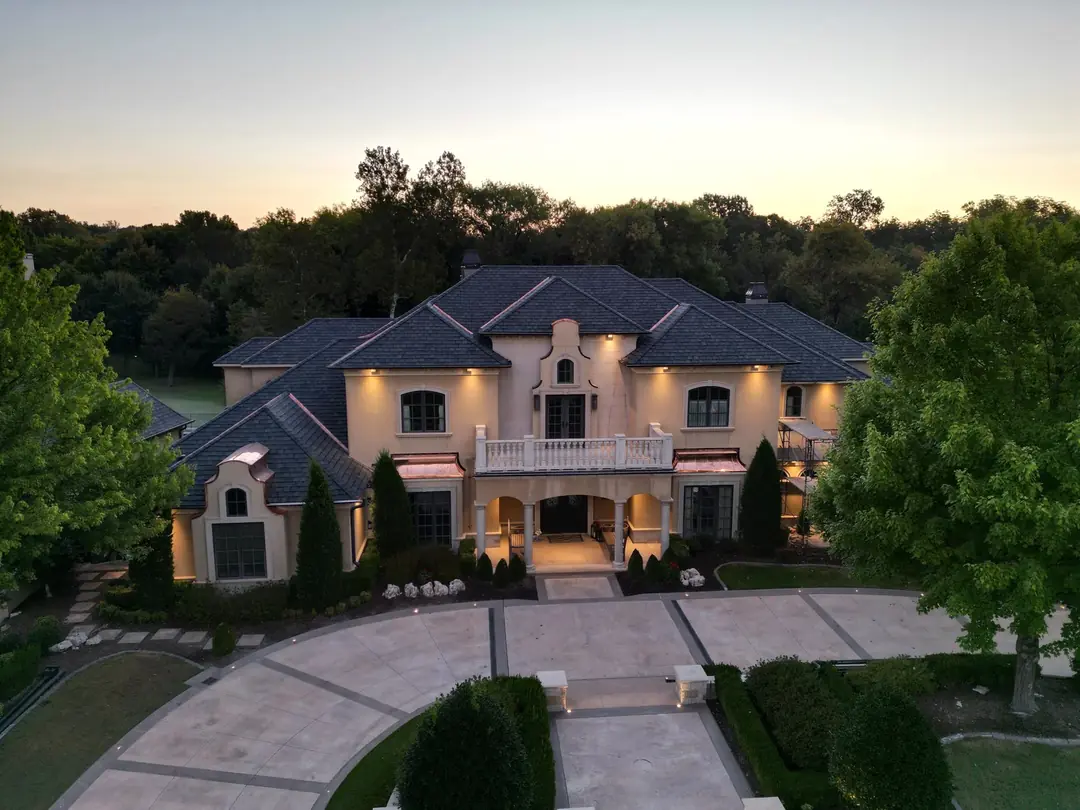
Cedar Shake Roofing in Oklahoma: Pros, Cons, and Real Costs
Cedar shake vs. cedar shingle roofs in Oklahoma: realistic lifespan, 2026 costs, insurance and fire ratings, maintenance, and look-alike alternatives.

The short answer: In Oklahoma's heat, humidity and hail, a Grade 1 Blue Label cedar shake roof realistically lasts about 20 to 30 years with regular maintenance, and less without it. It costs roughly $13 to $20 per sq ft installed, often raises insurance premiums, and needs cleaning and preservative treatment every 5 to 8 years. Composite shake and stone-coated steel deliver most of the look with Class 4 hail ratings.
In this guide 11 sections
- Cedar Shakes vs. Cedar Shingles: What's the Difference?
- How Long Does a Cedar Shake Roof Last in Oklahoma?
- What Cedar Shake Roofing Costs in Oklahoma (2026)
- The Insurance Conversation
- The Fire Question
- Cedar Shake Maintenance: The Schedule That Keeps It Alive
- Where Cedar Fails in Oklahoma (and How to Mitigate It)
- When Cedar Is the Right Call
- Cedar Alternatives That Capture the Same Look
- Frequently Asked Questions About Cedar Roofs
- Bottom Line
There's a reason a cedar shake roof catches your eye from across the neighborhood. The texture, the depth, the way the wood weathers from honey-amber to silver-gray over a few summers. There's no other roofing material that ages quite like it.
For certain homes in Tulsa, Bixby, Jenks, and the surrounding metro, cedar is the only material that looks right. Tudor revivals, English country homes, lakefront estates, anything with significant architectural character. They wear cedar the way a craftsman house wears a clay tile roof. It just fits.
But cedar in Oklahoma is also a complicated decision. The same climate that makes our state a great place to grow corn, humid summers, intense UV, hailstorms that bring out the news helicopters, is hostile to wood roofing. A cedar shake roof in Oklahoma is a premium product that requires a premium budget, premium maintenance, and a frank conversation about insurance.
This guide gives you the honest version of that conversation. We'll cover what cedar shake actually is, the difference between shakes and shingles, how long it really lasts in the Tulsa climate, what it costs in 2026, the maintenance schedule that keeps it alive, and the alternatives that capture the same aesthetic without the headaches.
Cedar Shakes vs. Cedar Shingles: What's the Difference?
The terms get used interchangeably, but they're two different products, and the distinction matters because their performance in Oklahoma is different.
- Cedar shakes are split from the log, usually hand-split or hand-split-and-resawn. They have a rough, textured face and irregular thickness. Shakes are typically 3/8" to 3/4" thick, and they create the deep, rustic shadow line you see on luxury homes.
- Cedar shingles are sawn on both faces, producing a smoother, more uniform appearance and a thinner profile (3/8" to 1/2"). Shingles lay flatter and look more refined: the right call for traditional or coastal-style homes where you want texture without the rough-hewn look.
Both come in grades. The Cedar Shake & Shingle Bureau (CSSB) certifies products as Grade 1 ("Blue Label": premium, 100% heartwood, edge grain), Grade 2 ("Red Label"), and Grade 3 ("Black Label"). For Oklahoma installations, Grade 1 Blue Label is the only grade we recommend. The lower grades have more sapwood, which absorbs moisture and rots faster in our humidity.
The species also matters. Western Red Cedar dominates the U.S. market because of its natural rot and insect resistance. Alaskan Yellow Cedar is denser, more dimensionally stable, and even longer-lasting, but it's noticeably more expensive and harder to source.
How Long Does a Cedar Shake Roof Last in Oklahoma?
Manufacturers and Pacific Northwest installers will quote you 30 to 50 year lifespans for cedar. Those numbers are real, in Seattle. In Tulsa, the honest expected service life is shorter, and pretending otherwise is how homeowners get blindsided 18 years into a roof they thought would outlast them.
Our field experience across the Tulsa metro suggests realistic Oklahoma cedar shake lifespans of:
- 20 to 30 years for properly maintained, Grade 1 Blue Label shakes on a well-ventilated roof in a low-hail neighborhood
- 15 to 20 years for installations that miss one of those factors (low grade, poor ventilation, or repeated hail exposure)
- 10 to 15 years for poorly installed, under-maintained, or hail-battered cedar, and yes, we see these too
Compare that to a Class 4 impact-resistant asphalt shingle (25 to 30 years in Oklahoma) or a metal roof (40 to 70 years), and cedar's lifespan-per-dollar math gets harder.
The single biggest variable is hail. Impact ratings for cedar vary with thickness, and most cedar products fall short of the UL 2218 Class 4 rating that impact-resistant asphalt shingles and steel carry. For a fuller breakdown of how long roofs last in Oklahoma by material, see our dedicated guide.
What Cedar Shake Roofing Costs in Oklahoma (2026)
Cedar is, without exaggeration, the most expensive mainstream residential roofing material. The installed cost in Tulsa in 2026 runs roughly:
Roof type | Installed cost per sq ft | 2,500 sq ft home |
3-tab asphalt shingles | $4.50-$6.50 | $11,000-$16,000 |
Architectural asphalt | $5.50-$9.00 | $14,000-$22,000 |
Class 4 impact-resistant asphalt | $7.50-$11.00 | $19,000-$27,500 |
Standing-seam metal | $12-$18 | $30,000-$45,000 |
Cedar shingles (Grade 1) | $10-$15 | $25,000-$37,500 |
Cedar shakes (Grade 1) | $13-$20 | $32,500-$50,000 |
Slate | $20-$40 | $50,000-$100,000 |
Clay tile | $15-$30 | $37,500-$75,000 |
Cedar slots in just below slate and clay tile, and roughly 2 to 3x the cost of architectural asphalt. If you're comparison shopping, see our best roofing materials for Tulsa homes breakdown.
What drives cedar costs:
- Material itself. Grade 1 Blue Label shakes run $400 to $700 per square (100 sq ft) versus $80 to $140 for architectural asphalt.
- Labor intensity. Cedar installs roughly 2 to 3x slower than asphalt because each shake is hand-placed with proper exposure and stagger.
- Underlayment and accessories. Cedar roofs require a specific underlayment system (often interleaved with the shakes, plus a high-temp ice-and-water shield at vulnerable areas): more material than a standard asphalt roof.
- Skilled labor scarcity. Cedar installation is a craft skill, and the number of installers in the Tulsa metro who can do it well is small. Limited supply equals higher labor rates.
The Insurance Conversation
Here's where many Oklahoma cedar projects run into reality. Insurance carriers have responded to decades of Oklahoma hail claims by treating cedar as an elevated risk, and several major carriers either won't write a new policy on a cedar roof, will require an inspection first, or will surcharge the policy.
What you can expect:
- Higher premiums. A cedar roof on a Tulsa home typically adds $400 to $1,500 per year to the homeowner's policy compared to asphalt.
- Higher deductibles. Many carriers apply a separate wind/hail deductible (often 1 to 5% of dwelling value) to roofs of any type in Oklahoma, but on cedar it sometimes goes higher.
- Limited carriers. If you're switching insurers, get quotes before you commit to a cedar roof. Some won't write the policy at all.
- Depreciation. When a hail claim does happen on cedar, depreciation runs faster than on asphalt: meaning your ACV vs. RCV payout math is worse (our insurance claims page explains the difference).
This is not a reason to avoid cedar. It is a reason to call your insurance agent before you sign the contract. Knowing your annual cost of insurance over 25 years is part of the true cost of ownership.
The Fire Question
Untreated cedar is combustible. This is the elephant in the room, and it's worth addressing directly. Building codes, including the International Residential Code, rely on fire tests (ASTM E108 / UL 790) that classify roof coverings as Class A (highest fire resistance), Class B, or Class C.
Untreated cedar shakes are typically Class C, which is acceptable under most Oklahoma jurisdictions for standard residential construction but falls below the rating required in some wildland-urban interface areas.
Pressure-treated and fire-retardant cedar shakes (specified with a "CertiClass" Class A or Class B label from the CSSB) bring the rating up to Class B or Class A, comparable to asphalt or metal. If your insurance carrier or local code requires Class A, this is a non-negotiable upgrade, typically a 10 to 15% material premium.
For most Tulsa metro neighborhoods, Class B treated cedar is a reasonable middle ground. Verify what your local jurisdiction requires before specifying.
Cedar Shake Maintenance: The Schedule That Keeps It Alive
Cedar is the only common roofing material that requires ongoing maintenance to hit its expected lifespan. If you skip the maintenance, the 25-year roof becomes a 15-year roof. If you do it properly, you get every year of life the product was built for.
Annual or biennial tasks:
- Clean debris off the roof. Leaves, pine needles, and tree litter trap moisture against the wood. Especially critical in valleys and on north-facing slopes that don't dry out as quickly.
- Trim overhanging branches. Cedar that's shaded all day stays wet and grows moss. Six feet of clearance from the roof is a good target.
- Inspect for split, cupped, or curled shakes. Individual shakes can be replaced; widespread failure is a different conversation.
- Check the valleys and flashings. Most cedar roof leaks happen at transitions, not in the field. Our roof flashing importance article explains why this matters across every roof type.
Every 5 to 8 years:
- Pressure wash (carefully) or hand-clean to remove moss, lichen, and accumulated debris. Pressure washing cedar is controversial: too much pressure damages the wood. A soft wash with a cedar-safe cleaning product is preferable.
- Apply a penetrating wood preservative. Products with copper naphthenate, zinc naphthenate, or oil-based UV inhibitors slow weathering and prevent rot. Skip the film-forming finishes. They trap moisture.
Every 12 to 15 years:
- Replace failed shakes as a batch maintenance project rather than one at a time. This is normal and expected: cedar is a living material, not a sealed assembly.
Our annual roof maintenance checklist for Tulsa covers the seasonal walk-throughs that apply to any roof, with extra attention to wood roofs.
Where Cedar Fails in Oklahoma (and How to Mitigate It)
Three failure modes account for most cedar problems we encounter on Tulsa repair calls:
1. Hail Damage
Cedar holds up better than 3-tab asphalt against pea-sized hail, but a Tulsa-typical 1.5"+ hail event will leave visible fracture lines and reduce the effective lifespan of every shake on the roof. Damage shows up as cracks running with the grain, dished impacts, and missing chunks at exposed corners.
Mitigation: Cedar doesn't offer the same broad range of Class 4 options that asphalt and steel do. The best mitigations are (a) live in a less hail-prone microclimate, (b) accept that you'll likely file a claim every 8 to 12 years, and (c) budget accordingly.
2. Moss, Algae, and Rot
Tulsa humidity feeds moss and lichen growth, especially on north-facing slopes and under tree canopy. Untreated, these organisms hold moisture against the wood and rot eventually sets in.
Mitigation: Copper or zinc strips installed near the ridge release ions in rainwater that suppress moss. Annual cleaning. Aggressive tree trimming.
3. UV Degradation
Western Red Cedar weathers gracefully in low-UV climates. In Oklahoma sun, the weathering happens faster and goes farther: eventually you're not just looking at gray patina, you're looking at structural softening of the wood fibers on exposed surfaces.
Mitigation: Periodic application of UV-inhibiting penetrating preservative. South and west-facing slopes weather fastest, so they should get priority during maintenance cycles.
When Cedar Is the Right Call
Despite everything above, cedar is genuinely the right material for certain Tulsa homes. The factors that make cedar make sense:
- The architecture demands it. Tudor revival, English country, certain craftsman and shingle-style homes look wrong with anything else. Resale value depends on staying authentic.
- You're in the home for 15+ years. Cedar pays back its premium aesthetically, not financially, so the longer you live with it, the more sense the investment makes.
- You're prepared for the maintenance. Not just willing to pay for it: willing to schedule it and follow through.
- The neighborhood supports the value. A $40,000 cedar roof on a $250,000 home doesn't pencil out. The same roof on a $1M+ home does.
- You've talked to your insurance agent. The premium impact is locked in before you sign.
Cedar Alternatives That Capture the Same Look
If you love the cedar aesthetic but the cost, maintenance, or insurance picture is a deal-breaker, several alternatives get most of the visual character with better performance:
- Composite shake (synthetic cedar). Products from manufacturers like DaVinci and CeDUR use polymer or rubber to mimic cedar's texture and shadow lines, with Class 4 impact ratings and Class A fire ratings. Installed cost runs $9 to $14 per sq ft: comparable to cedar but with a 50-year warranty and no annual maintenance. For many Tulsa homeowners, this is the right answer.
- Stone-coated steel. Steel panels stamped to mimic shake texture, with a stone-chip surface for visual depth. Installed at $9 to $13 per sq ft, and they shrug off Oklahoma hail.
- Architectural asphalt in cedar tones. Premium designer shingles from GAF, CertainTeed, and Owens Corning offer shake-imitating profiles in cedar color blends. Not the same texture, but a fraction of the cost. See our architectural vs. 3-tab shingles comparison.
For the full range of high-end residential options, see our slate roofing 101 guide: slate is the other premium natural material commonly considered alongside cedar.
Frequently Asked Questions About Cedar Roofs
How much does a cedar shake roof cost in Tulsa?
About $13 to $20 per sq ft installed for Grade 1 shakes and $10 to $15 for cedar shingles in 2026, or roughly $32,500 to $50,000 for shakes on a typical 2,500 sq ft roof.
Is a cedar shake roof a good investment in Oklahoma?
Financially, no: cedar costs more upfront and lasts about the same time as a quality Class 4 asphalt roof, which costs roughly a third as much. Aesthetically and for certain architectural styles, cedar is the only correct answer. The "right" investment depends on what you're optimizing for.
Can cedar shakes be installed over an existing roof?
No. Cedar requires a properly ventilated installation with spaced sheathing or an underlayment system designed for wood roofs. A roof-over installation is not appropriate.
How often does a cedar roof need to be replaced in Oklahoma?
Plan on 20 to 30 years for Grade 1 cedar with proper maintenance and no major hail events. Hail can shorten that significantly.
Does cedar grow moss faster than other materials?
Yes: wood retains moisture longer than asphalt or metal, and Oklahoma humidity is enough to support biological growth on shaded sections. Treatment with copper or zinc strips and annual cleaning are essential.
Will my insurance go up if I install a cedar roof?
Almost certainly. Get a quote from your carrier before committing. Some carriers may decline the risk entirely.
Is there a fire-rated cedar?
Yes. Class B and Class A fire-treated cedar shakes are available (certified by the CSSB) and bring the fire performance up to par with asphalt or metal. Expect a 10 to 15% material premium.
Bottom Line
Cedar shake roofing in Oklahoma is a premium product for a specific kind of home and a specific kind of owner. When the architecture calls for it, the budget supports it, and the owner is committed to the maintenance, cedar is unmatched.
When any of those three is missing, the better answer is usually a composite shake or a Class 4 asphalt product that delivers most of the look at a fraction of the lifetime cost.
If you're considering cedar, or you have an existing cedar roof in the Tulsa metro and want an honest assessment of whether it's repairable or due for replacement, the RainTech residential roofing team can inspect, quote, and walk you through the alternatives. We'll tell you when cedar is the right call and when you'd be better served by something else.
Schedule a roof consultation →
Sources and disclaimer. Information in this article comes from manufacturer documentation for the products named and RainTech’s own installation experience in Oklahoma. It was current as of September 24, 2026; laws, insurance rules, manufacturer terms and prices change. This article is general information, not legal, insurance, tax or financial advice.


