
Tile Roof Repair in Tulsa: Cost, Timing & What to Know
Clay and concrete tile roof repair in Tulsa: cracked tiles vs. failed underlayment, repair vs. re-underlayment, tile matching, costs, and finding a tile roofer.

The short answer: Tile roof repairs fall into two groups. Cracked or broken tiles are a surface repair, typically $595 to $2,500 in Tulsa. If the roof leaks while the tiles look fine, the underlayment beneath them has usually failed, and fixing that means lifting and resetting the tiles over new underlayment, typically $25,000 to $55,000+. Hire a roofer who actually works on tile; walking on it wrong breaks more tiles.
In this guide 11 sections
- How Tile Roofs Actually Work
- The Two Categories of Tile Roof Repair
- When to Repair vs. When to Re-underlayment
- Finding a Contractor Who Actually Works on Tile
- The Tile Matching Challenge
- Common Tile Roof Issues in Tulsa
- Insurance and Tile Roof Repairs
- What a Quality Tile Repair Quote Should Include
- Should You Convert to Asphalt or Metal?
- Frequently Asked Questions About Tile Roof Repair
- Get a Tile-Specific Inspection
Tile roofs are a small slice of the Tulsa roofing market, but they’re a passionate one. The homeowners who have them tend to love them, and the homeowners who need them repaired tend to be frustrated, because tile is fundamentally different from asphalt and most roofers in the metro don’t actually know how to work on it correctly.
We see two main scenarios with tile roofs in Tulsa. First, the established Spanish-style homes in older South Tulsa neighborhoods: homes from the 1920s, 30s, and 40s with original concrete or clay barrel tile that’s been on the roof for 70+ years.
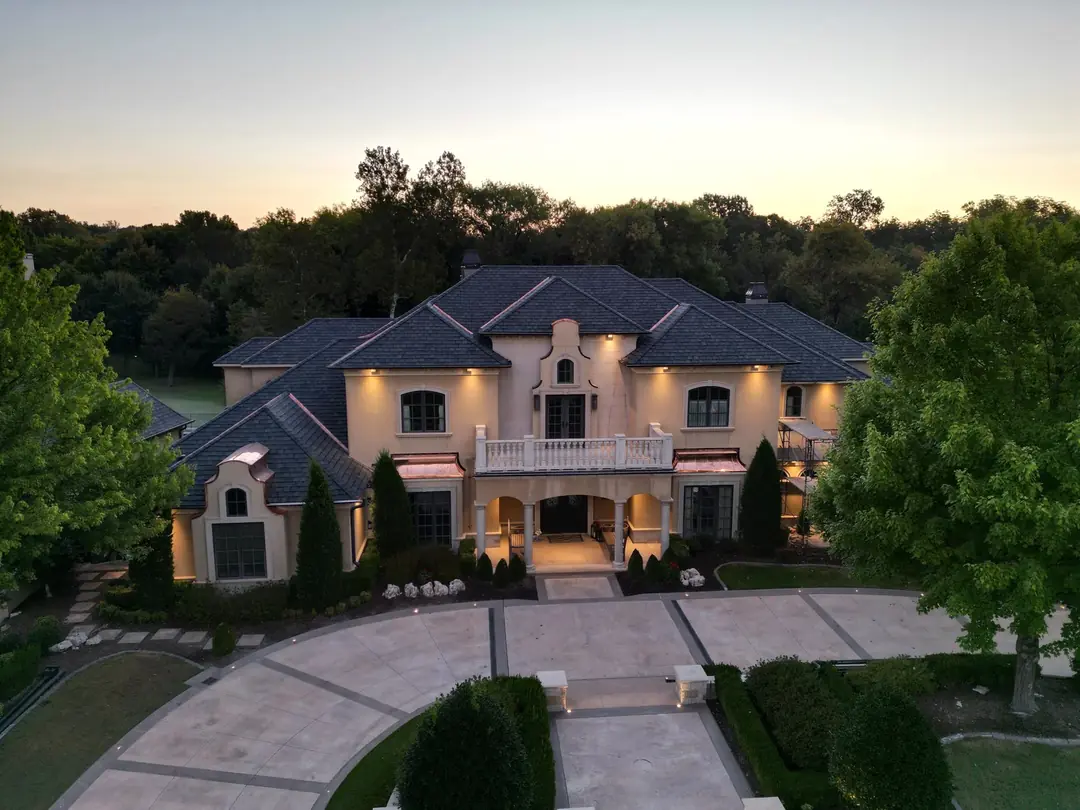
Second, the newer custom builds in Jenks, Owasso, and Bixby where homeowners chose tile for the architectural look on Mediterranean or hacienda-style homes.
Both groups have something in common: when something goes wrong, the repair process is more complicated, more expensive, and more easily botched than asphalt repairs.
This guide walks through what tile roof repair in Tulsa actually involves, what it costs, when to repair vs. replace, and how to find a contractor who knows what they’re doing.
How Tile Roofs Actually Work
Before getting into repair, it’s worth understanding the system, because it’s different from asphalt in ways that matter.
A tile roof has three layers:
- The tile itself: concrete or clay tiles in various profiles (S-tile/barrel, flat/slate-look, mission, etc.)
- The underlayment: the actual waterproof barrier underneath
- The decking: the structural plywood or board sheathing under everything
Here’s the part most people don’t realize: the tile itself isn’t the waterproof layer. The underlayment is. Tile sheds the bulk of the water and protects the underlayment from UV and weather, but the actual barrier between the outside and your home is the membrane underneath.
This matters for two reasons:
- Tile roofs can leak even when no tiles are visibly broken: if the underlayment fails, water gets through.
- Tile lasts dramatically longer than the underlayment: the tiles often outlast the underlayment by 30+ years.
In the Tulsa metro, the typical lifespan pattern looks like:
- Concrete tile lifespan: 50-60 years
- Clay tile lifespan: 75-100+ years (some are still going strong at 100+)
- Underlayment lifespan: 25-35 years
That mismatch is the source of most tile roof issues we see in Tulsa.
The Two Categories of Tile Roof Repair
Tile repairs fall into two distinct categories, and the cost and complexity vary dramatically between them.
Category 1: Surface tile repairs
This is the easier category. A few tiles cracked from impact, debris, or freeze-thaw cycles. Maybe a hailstone broke a few. Maybe a tree branch took out a section. Maybe a pipe boot failed and surrounding tiles need to be removed and reset.
Surface tile repair involves:
- Carefully removing the affected tile(s) without damaging surrounding tiles
- Inspecting the underlayment beneath for damage (often there’s water staining indicating issues)
- Replacing or patching the underlayment if compromised
- Installing replacement tiles that match
- Re-cementing or re-fastening as appropriate
Cost in Tulsa: typically $595-$2,500 depending on how many tiles, how accessible the area is, and tile matching difficulty.
Category 2: Underlayment replacement (the big one)
When the underlayment beneath the tile reaches end of life, water starts coming through despite the tiles being intact. This is the more expensive scenario, and it’s the one that surprises Tulsa homeowners.
Underlayment replacement involves:
- Removing all the tiles in the affected area (often the whole roof)
- Storing the tiles carefully so they can be reused
- Tearing off the failed underlayment
- Inspecting and repairing decking as needed
- Installing new underlayment (typically a self-adhered, high-temperature membrane appropriate for tile)
- Reinstalling the original tiles (using new ones to replace any that broke during removal)
Cost in Tulsa: typically $25,000-$55,000+ depending on roof size, tile profile, and complexity. The labor is intensive: careful removal and reinstallation of thousands of tiles takes time, and the labor pool in Tulsa qualified to do this is small.
When to Repair vs. When to Re-underlayment
The decision framework, similar to our repair-vs-replacement guide for asphalt, but adapted for tile:
Lean toward simple tile repair if
- Damage is localized (a few tiles, one section)
- Underlayment is still relatively young (under 20 years)
- No active leaks beyond the obvious damage zone
- Decking shows no signs of widespread water staining
- Roof age is under 25 years (underlayment likely still good)
Lean toward underlayment replacement if
- Multiple leak points appearing across the roof
- Roof underlayment is 25+ years old
- Repeated repairs that haven’t held
- Visible water staining in attic across multiple roof areas
- Tiles are pulling away or shifting due to underlayment failure
- Mortar/flashing failures around penetrations widespread
In our experience, Tulsa homes with original tile roofs from the 1940s-50s have typically had at least one underlayment replacement by now. Homes that haven’t are usually overdue, and small repairs are increasingly band-aid solutions.
Finding a Contractor Who Actually Works on Tile
Here’s the practical reality: most Tulsa-area roofing contractors don’t really do tile work. Tile is a different skill set than asphalt: different tools, different materials, different techniques, different supply chains for replacement tile.
Some “tile repairs” by general roofing contractors involve:
- Forcing in incorrect replacement tiles that don’t quite match
- Damaging surrounding tiles during removal because they don’t know the technique
- Improperly sealing or fastening
- Skipping underlayment inspection
- Using sealants and adhesives intended for asphalt that fail on tile
The result: visible cosmetic problems, premature failure of the repair, and often more damage than was there originally.
What to look for in a Tulsa tile roof contractor:
- Specific tile experience: not just “we work with all materials”
- Tile supply relationships: they should know where to source replacement clay or concrete tile, including discontinued profiles
- Photo portfolio of tile work: actual completed projects, not stock images
- References from other tile roof homeowners in the Tulsa area
- Manufacturer training: Eagle Roofing, Boral, Ludowici, US Tile all offer contractor training programs
- Specialty equipment: tile cutting tools, specific scaffolding for steep tile work
- Willingness to walk the entire roof: not just look at the visible damage
For broader contractor evaluation principles, our contractor selection guide applies here too, but the tile-specific items above are non-negotiable.
The Tile Matching Challenge
If you have an older tile roof, particularly a Spanish-style barrel tile from the 1920s-1940s, finding replacement tiles that match exactly can be the hardest part of the repair.
The challenges:
- Color variation in vintage tiles based on clay source, firing, and weathering over decades
- Profile changes in tile manufacturing over the years
- Discontinued lines: many original manufacturers no longer exist or no longer produce specific profiles
- Shape variations between manufacturers that look similar but don’t fit interchangeably
Practical approaches contractors use:
- Salvage from the same roof: pulling tiles from less-visible areas (back of the house, hidden behind equipment) to use in highly visible repair zones, then installing close-match replacement tiles in the hidden areas.
- Salvage yards: Tulsa has a few specialty salvage operations that maintain stocks of vintage tile.
- Custom matching: some manufacturers will custom-fire small batches to match specific historical colors at premium prices.
- Acceptable mismatch: sometimes the homeowner accepts a slight color/profile difference because exact match is unobtainable.
A reputable tile contractor will discuss matching strategy upfront, not surprise you with mismatched tiles after install.
Common Tile Roof Issues in Tulsa
A few problems we see repeatedly on Tulsa tile roofs:
Hail damage
Concrete and clay tiles handle hail much better than asphalt. They often shrug off impacts that would total an asphalt roof. But severe hail (1.5"+ stones) can crack tiles, particularly older clay tiles that have weathered for decades. Damage isn’t always immediately visible from the ground; cracks can be hairline or only on the underside.
After a major hail event, get a tile-specific inspection. The damage may be subtle but real.
Mortar failure
Many older Tulsa tile roofs use mortar at the ridges, hips, and edges. Over decades, mortar deteriorates from freeze-thaw cycles. We see homes where the mortar is cracked and falling out, leaving tiles loose at critical edges.
Repair: re-mortaring or transitioning to modern flexible adhesive systems that handle thermal cycling better.
Pipe boot and flashing failures
The penetrations through tile roofs (plumbing vents, HVAC vents, chimneys) require specialized flashing and sealing. Many original installations from decades ago used materials that have aged out. Repairs often involve removing surrounding tiles, replacing flashing components, and resetting.
Cracked tiles from foot traffic
Tile can be walked on, but improperly. Walking on the wrong part of a tile, walking on cold tiles, or walking with the wrong shoes can crack them. We’ve seen homeowners (and contractors who don’t know tile) crack a dozen tiles trying to inspect a roof.
If you have a tile roof, don’t walk it yourself. The repair to your DIY inspection often costs more than the issue you were trying to find.
Underlayment migration
Particularly an issue in older homes: the underlayment beneath the tiles can shift over time, especially in steep-pitch areas. This creates gaps and potential leak paths even when tiles are intact. Inspection (carefully lifting tiles in suspect areas) is the only way to diagnose this.
Insurance and Tile Roof Repairs
A few notes on how insurance interacts with tile in the Tulsa market:
- Hail damage is typically covered the same way as asphalt damage, though replacement cost is higher
- Wind damage to tile roofs is less common than asphalt because tiles are heavier, but does occur in severe events
- Underlayment failure due to age is generally NOT covered. It’s considered wear, not damage
- Insurance carriers may push for partial repair on extensive damage; sometimes negotiating for full replacement is appropriate when in-kind matching is impossible
- Documenting tile condition pre-storm with photos can help claim discussions if damage occurs
The insurance side of tile claims is more complex than asphalt because matching, replacement availability, and labor rates are all different. Working with a contractor experienced in tile claims matters.
What a Quality Tile Repair Quote Should Include
When you’re getting tile repair quotes in Tulsa, look for:
- Detailed scope: exactly which tiles, which areas, what underlayment work
- Tile matching plan: what tiles will be used, sourced from where, how matching will be handled
- Underlayment inspection commitment: a real look beneath the tiles, not just surface work
- Decking assessment: checking for water-damaged decking that needs replacement
- Photo documentation plan: before, during, after photos of the work
- Workmanship warranty: typically 5-10 years for tile repair work, longer for full underlayment replacement
- Specific products: underlayment brand, mortar/adhesive types, fastener specifications
Vague quotes are particularly problematic with tile because the variability in approach and materials is much larger than asphalt.
Should You Convert to Asphalt or Metal?
Some Tulsa homeowners with aging tile roofs ask about converting to asphalt or metal during a major repair event. The economics:
- Tile roof full replacement (with matching): $30,000-$55,000+
- Tile roof underlayment replacement (keeping tiles): $25,000-$45,000
- Conversion to asphalt: $15,000-$22,000 (cheaper but loses architectural character)
- Conversion to metal: $30,000-$50,000 (similar cost, dramatically different aesthetic)
The right choice depends on:
- Architectural fit: converting a Spanish-style home to asphalt often hurts both aesthetics and resale value
- Long-term plans: staying long-term favors keeping tile; selling soon makes conversion math harder
- Tile condition: if 50%+ of tiles need replacement, conversion sometimes makes more financial sense
- HOA restrictions: some neighborhoods (especially older South Tulsa) have covenants requiring specific roofing materials
We’ve worked through this decision with multiple Tulsa homeowners. There isn’t a universal right answer. It’s a real trade-off between cost, character, and long-term plans.
Frequently Asked Questions About Tile Roof Repair
How much does tile roof repair cost in Tulsa?
Replacing a few cracked tiles typically runs $595 to $2,500. Replacing the underlayment under a tile roof, which means lifting and resetting the tiles, typically runs $25,000 to $55,000+.
Why is my tile roof leaking if the tiles look fine?
The tiles shed most of the water, but the underlayment beneath them is the real waterproofing layer. When it reaches the end of its life, the roof leaks even with intact tiles.
Can broken roof tiles be matched?
Often, through salvage tiles, the original manufacturer, or by borrowing tiles from a less visible slope. Discontinued profiles are the hardest.
Get a Tile-Specific Inspection
If you have a tile roof in Tulsa and you’re seeing issues, leaks, broken tiles, age concerns, post-storm damage worries, get an inspection from someone who actually works on tile. Not someone who’ll quote you for “asphalt logic” applied to a tile roof.
We do free roof inspections across the Tulsa metro and we have specific tile experience for both repairs and full underlayment replacements. Our inspections include lifting tiles in suspect areas to evaluate underlayment condition, photographing what we find, and giving you a clear written assessment with realistic options.
Tile roofs are wonderful when maintained correctly, and they last longer than nearly any other material when you get the underlayment right. Schedule a free Tulsa tile roof inspection and let’s see where yours stands.
Schedule Your Free Tulsa Tile Roof Inspection →
Sources and disclaimer. Information in this article comes from manufacturer installation instructions, building code and RainTech’s own repair and inspection experience. It was current as of May 12, 2026; laws, insurance rules, manufacturer terms and prices change. This article is general information, not legal, insurance, tax or financial advice.


