
7 Signs You Need a New Roof in Broken Arrow
Most homeowners in Broken Arrow find out they need a new roof one of two ways. Either a storm rolls through and the conversation gets started for them by a guy in a truck knocking on their door the next morning. Or they notice something — a stain on the ceiling, a missing shingle in the yard, a corner that just looks off — and start wondering whether it’s time.
Either way, the question is the same: how do you know when your roof is actually done versus when it’s got a few more years left in it?
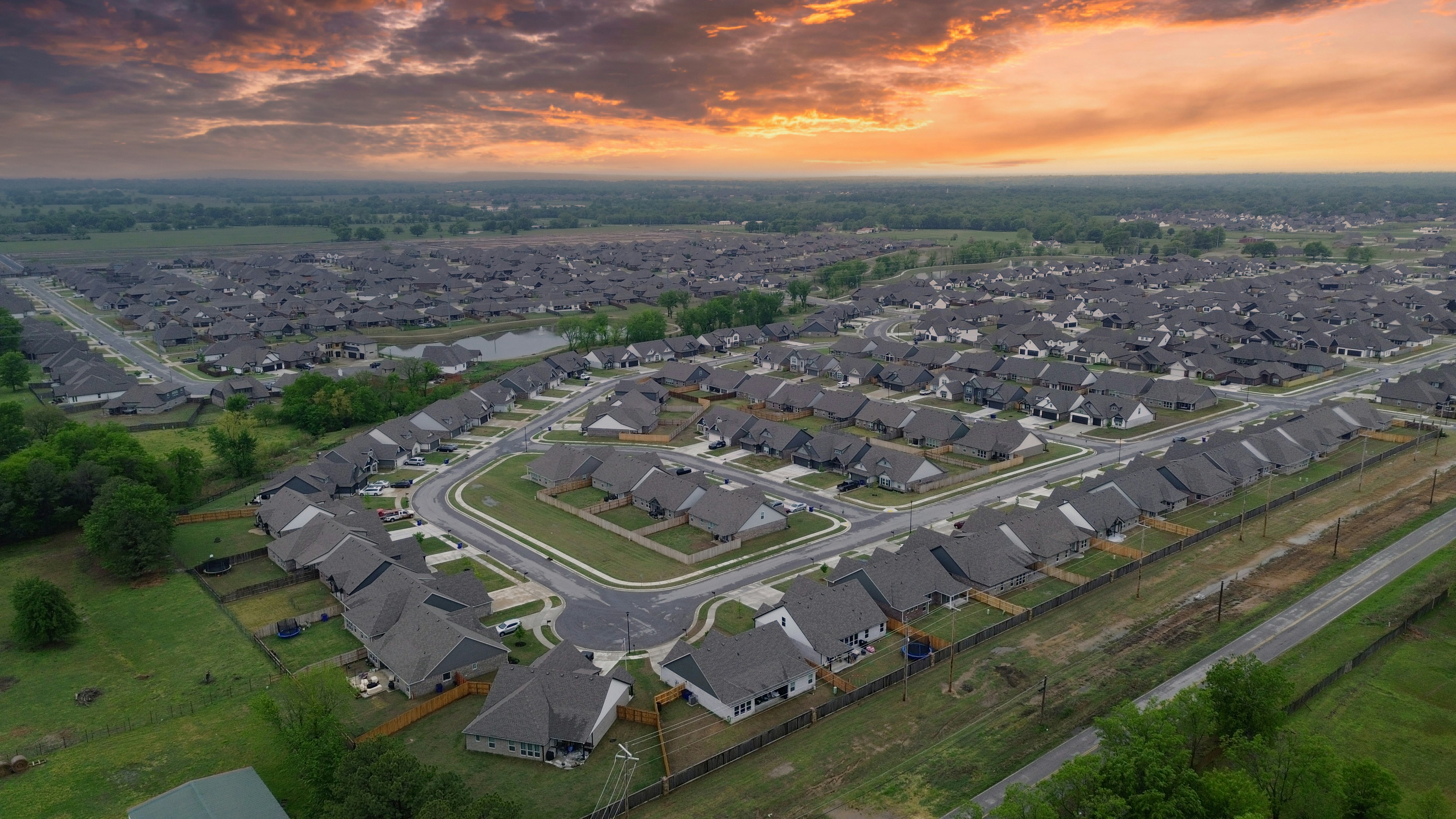
Broken Arrow’s housing stock skews newer than central Tulsa’s. A lot of homes in the Battle Creek, Forest Ridge, and Stone Wood neighborhoods are 20–30 years old now, which puts them right at the upper end of an asphalt shingle’s useful life in Oklahoma. Throw in our hail and wind, and a lot of BA roofs are starting to show their age — even when they look fine from the curb.
Here are the seven signs we tell our customers to watch for. If you’re seeing two or more of these, it’s worth getting a free inspection. If you’re seeing four or more, you’re probably past due.
1. Curling, Cupping, or Clawing Shingles
Asphalt shingles are supposed to lay flat. When they don’t, that’s a structural problem with the shingle itself, not just an aesthetic one.
Curling is when the corners of the shingle start to lift up — usually because the asphalt has dried out from years of UV exposure and heat. Once a shingle is curled, wind gets underneath and accelerates the failure. The next decent storm pulls it off entirely.
Cupping is when the center of the shingle dishes downward and the edges lift up. This is usually a ventilation issue — too much heat in the attic cooks the shingles from underneath.
Clawing is the opposite — the edges curl down and the middle bumps up. Same root cause, same outcome: shingles failing in slow motion.
If you’re standing in your driveway in BA looking up at your roof and the shingles look anything other than flat, that’s a problem. Get up close (or have someone with a ladder do it) and check. Clear curling on more than 20–30% of the field is usually a replacement situation.
2. Significant Granule Loss
Pick up a handful of leaves and mulch from the gutter or the splash blocks at your downspouts. If you’re seeing a lot of black or colored granules — like coarse sand — that’s the protective top layer of your shingles washing away.
Some granule loss is normal, especially in the first few months after a new roof goes on (excess granules from manufacturing). What’s not normal: granules collecting in piles at the base of downspouts, granules visible on driveways and walkways, or bald spots on shingles where the dark asphalt mat is showing through.
Once granules are gone, the shingle is exposed to direct UV, which accelerates failure dramatically. A roof with widespread granule loss isn’t going to last another five years no matter what anyone tells you.
The other thing to know: granule loss accelerates after a hailstorm, even one that didn’t seem severe at the time. If we get a hail event and you suddenly notice your gutters are full of granules, that’s the storm doing damage you couldn’t see from the ground.
3. Missing Shingles
Wind events in Broken Arrow regularly hit 60–70 mph during storm season, and underrated wind warranties on builder-grade shingles can fail at lower speeds than that. If you’re walking your yard after a storm and finding shingles in the grass, you’ve got two problems: the spot where they came from is now exposed, and your roof’s overall wind resistance is compromised.
A few isolated missing shingles can usually be repaired, especially on a roof less than 10 years old. Multiple missing shingles or recurring losses after every storm is replacement territory.
What we look for during an inspection: not just the missing shingle itself, but whether the surrounding shingles have lost their seal. Shingles bond together with thermal-activated adhesive strips. Once that seal breaks, the shingle next to the missing one is now vulnerable too.
We’ve seen Broken Arrow homes where one storm produced one missing shingle and three more came off the next month because the seal had failed all along that course.
4. Sagging Rooflines
This one is usually visible from the curb, and it’s serious. A sagging roof — meaning a section of the roof plane that’s bowed down rather than running flat from ridge to eave — almost always indicates a structural problem underneath. Either the decking is rotted, the rafters are damaged, or there’s a long-term water infiltration issue that’s compromised the framing.
Stand across the street from your house and look at your roof in profile. Compare the line of the ridge against the line of the eaves. They should both be straight. If you can see waves, dips, or a noticeable sag between rafters, get someone up there immediately.
Sagging roofs aren’t usually fixable as repairs. They’re decking and structural work, and they get more expensive the longer you wait.
5. Daylight Through the Roof Deck
This is the most overlooked sign because most homeowners never go into their attic, especially during the day.
Pick a sunny afternoon, climb up into your attic, and look up at the underside of the roof deck. With the lights off, you should see solid plywood or OSB. If you see pinpoints of daylight coming through, you’ve got holes — and where light gets through, water gets through too.
While you’re up there, check for:
Water staining on the underside of the decking (black or brown discoloration, especially around vent penetrations and chimneys)
Active or recent moisture (anything that feels damp, or insulation that looks compressed/discolored)
Daylight specifically around vent boots and chimneys (these are the most common leak points; pipe boots typically fail before shingles do)
A good attic inspection is honestly the cheapest, most informative thing you can do for your roof. Costs nothing but a few minutes and a flashlight.
6. Water Stains on Interior Ceilings or Walls
If you’ve got a brown stain on your living room ceiling, your roof is already leaking. The question is just how bad and how long.
Water travels. A leak originating at a poorly-sealed vent in the middle of the roof can show up as a stain on a ceiling 10 feet away, because water runs along the underside of the decking until it finds the lowest point.
By the time you see the stain inside, the water has already been getting in for some time — possibly weeks or months.
Don’t trust the “I’ll just paint over it” instinct. Painting a water stain doesn’t fix the leak. It just hides it until the next rain produces a fresh stain. And in the meantime, the moisture is sitting in your decking, your insulation, and possibly your framing.
Any active interior water staining warrants an immediate inspection. Sometimes it’s a $400 repair. Sometimes it’s a $14,000 roof replacement. The only way to know is to find the source.
7. Your Roof is Just Plain Old
Asphalt shingle roofs in Oklahoma’s climate generally last 18–28 years for architectural shingles, and 12–18 years for older 3-tab shingles. If you don’t know how old your roof is, here are a few ways to find out:
Closing documents from when you bought the home. A roof age disclosure is often required.
Permit records with the City of Broken Arrow. Roofing replacements require a permit, and those records are searchable.
HOA records, if applicable. Some HOAs maintain roofing histories.
The previous owner. If you can reach them, they’ll usually remember.
If your roof is over 20 years old, even if it looks fine, the clock is running. Insurance carriers in Oklahoma are increasingly capping coverage on older roofs — some now only cover roofs up to 15–20 years old at full replacement cost, and anything older gets covered at depreciated value (which can be 50% or less of the actual replacement cost). That alone is a reason to consider replacement before you have to.
The other thing to know about older roofs: they often look fine right up until they don’t. We’ve inspected roofs in Forest Ridge that were 22 years old, looked decent from the street, and turned out to have widespread underlying damage that wasn’t visible without getting on top of them.
What to Do If You’re Seeing the Signs
If two or more of the seven items above describe your roof, the right next step is a professional inspection. We do free roof inspections across Broken Arrow and the rest of the Tulsa metro, and what you’ll get is:
A walk-around of the roof itself, including photos and video of any issues we find
An attic inspection if accessible
An honest assessment — not every aging roof is a replacement; sometimes a repair is the right move
A written quote with everything itemized if replacement is recommended
No pressure, no scare tactics, no “you have to decide today” sales nonsense
We’ve been doing roofing in the Tulsa metro long enough that our reputation matters more to us than any single sale. If your roof has another five years in it, we’ll tell you that. If it doesn’t, we’ll show you what we’re seeing and let you make the call.
Why Broken Arrow Homeowners Should Get Ahead of This
The roofs that turn into emergencies are the ones that didn’t get inspected until after the leak started. The roofs that get replaced calmly, on a schedule the homeowner controls, with multiple quotes and time to make a smart decision, are the ones that got inspected before the situation forced anyone’s hand.
Broken Arrow has seen significant hail and wind events almost every storm season for the last decade. If your roof is more than 12 years old, there’s a real chance it’s already been damaged in ways that aren’t visible from the ground.
The longer that damage sits without being addressed, the worse it gets — and the harder it becomes to file a successful insurance claim, since most carriers have a one-year statute on filing storm-related claims in Oklahoma.
If you’ve been on the fence about getting your roof checked out, this is your reminder. Schedule a free roof inspection with our team and find out where your roof actually stands. Worst case, you’ll get peace of mind. Best case, you’ll catch a problem early enough to fix it before it costs you more than it has to.