
Metal Roofing in Tulsa: Pros, Cons, and Real Costs
Drive south on Riverside Drive on a sunny afternoon and you’ll see them — sleek standing seam metal roofs catching the light on a handful of newer homes mixed in among the asphalt shingle norm.
Twenty years ago, a metal roof in Tulsa meant a barn. Today it usually means a homeowner who’s done their research and decided to play the long game.
The interest in metal roofing in Tulsa has climbed steadily over the last decade, and we field more questions about it now than at any point I can remember.
Most of those questions break down into the same two: is it actually worth the cost? And will it hold up to Oklahoma hail?
Let’s take both of those head-on. Here’s the honest pros and cons of metal roofing for Tulsa homes, what it actually costs in this market, and when it does (and doesn’t) make sense.
What “Metal Roofing” Actually Means
Before getting into pros and cons, it’s worth clearing up some terminology, because “metal roof” can mean three very different products.
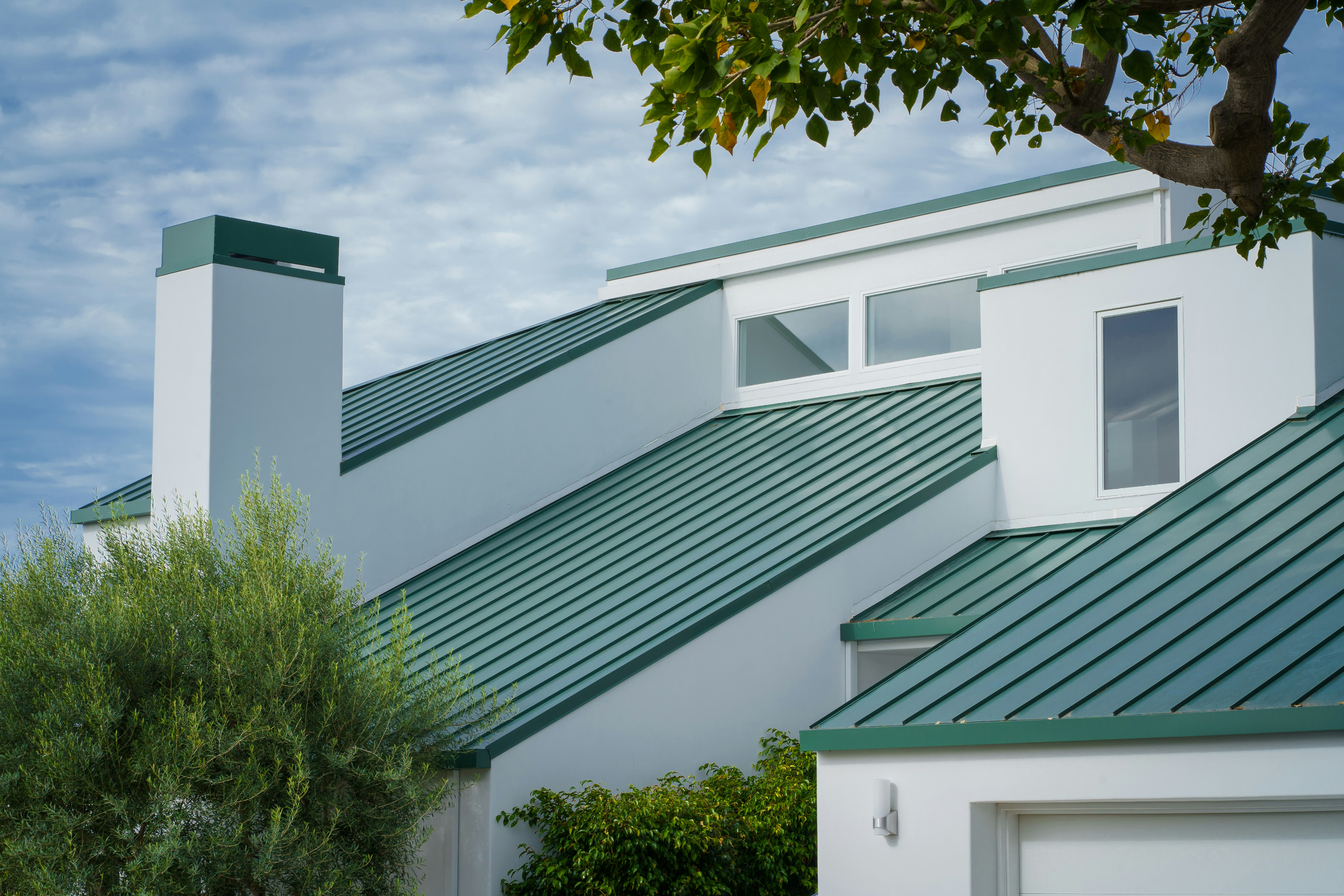
Standing seam. Continuous metal panels that run from the ridge to the eave with vertical raised seams that interlock. Fasteners are concealed under the seams, so nothing penetrates the panel surface. This is what most people mean when they say “metal roof” in a residential context, and it’s what we install most often.
Exposed-fastener metal (R-panel, 5V crimp). Sheets of metal screwed down through the face of the panel, with rubber-gasketed fasteners visible from the ground. Common on barns, outbuildings, agricultural structures. Cheaper than standing seam but with significant downsides for residential use that we’ll cover.
Stone-coated steel. Steel tiles or sheets coated with a layer of stone granules embedded in acrylic. Mimics the look of asphalt or tile from the ground while delivering metal performance. A middle-ground product — less common in the Tulsa market but growing.
For the rest of this article, when we say “metal roofing,” assume we’re talking about standing seam unless noted otherwise. It’s what 80%+ of metal roofs in the Tulsa metro should be, and it’s what we install on residential roofing projects.
The Pros: Why Tulsa Homeowners Choose Metal
1. Lifespan that’s hard to argue with
A properly installed standing seam metal roof in Tulsa will last 50–70 years. We’re still seeing original metal roofs from the 1980s on Tulsa-area homes that are perfectly serviceable today, which is more than we can say for most asphalt roofs of the same vintage. If you’re in your forever home, a metal roof is genuinely a one-and-done decision.
2. Hail performance is dramatically better
This is the big one for Oklahoma. Hail can dent metal — large stones absolutely can put visible dings in a steel panel — but it doesn’t fracture the substrate, expose the underlayment, or compromise the roof’s water-shedding ability the way it does with shingles.
Practically, this means: after a hailstorm that might have totaled an asphalt roof, your metal roof typically still functions perfectly. It might have cosmetic damage, which can be a separate insurance discussion, but the roof itself isn’t leaking.
We’ve seen Tulsa homes with metal roofs come through storms where every neighbor was filing claims, and the metal roof homeowner was drinking coffee in their kitchen, dry.
3. Energy efficiency that’s measurable in Oklahoma summers
A standing seam metal roof in a light color (not just white — a sage, a stone gray, or a light bronze counts) will reflect 25–40% more solar radiation than a dark asphalt roof. In Tulsa, where roof surface temperatures hit 160°F+ in July, that translates to a measurable reduction in attic temperatures and HVAC load.
Most homeowners with metal roofs report 7–15% summer cooling cost reductions versus their old asphalt roof. Not transformative — but real, and it adds up over decades.
4. Wind performance
Standing seam metal panels with concealed fasteners don’t have shingles to blow off. Wind warranties typically run 110–160 mph depending on the install method and panel profile. In Tulsa, where 70+ mph winds are routine during storm season, this matters.
5. Fire resistance
Metal is non-combustible. Most insurance carriers offer a small premium reduction for metal roofs based on fire resistance. Probably not the deciding factor for most Tulsa homeowners, but worth knowing.
6. Resale appeal (if you’re in the right neighborhood)
In some Tulsa neighborhoods — newer custom homes in Bixby, modern infill in Maple Ridge, contemporary builds in Jenks — metal is a desired feature that supports higher resale prices. In other neighborhoods, it can read as out-of-character. Worth thinking about if resale is a near-term consideration.
The Cons: Why Metal Isn’t Always the Answer
1. Upfront cost
A standing seam metal roof on a typical 30-square Tulsa home runs $24,000–$48,000, compared to $11,000–$18,000 for a quality asphalt shingle roof. That’s roughly double the cost. The lifespan is more than double, so on a per-year-of-service basis metal often wins — but the upfront capital outlay is real, and not everyone is positioned to make that trade.
2. The dent question
Hail dents are cosmetic, not functional. The roof still works. But some homeowners hate the look afterward, and dent claims with insurance carriers are inconsistent. Some carriers cover cosmetic hail damage on metal; some explicitly exclude it. Read your policy.
If your home is highly visible from the street, and the look of your roof matters to you aesthetically, this is something to factor in. We’ve had Tulsa customers with high-end homes where the visible dents from a 2023 hailstorm bothered them enough that they wished they’d gone with a Class 4 architectural shingle that could be replaced after a major storm.
3. Installation complexity
Standing seam metal is unforgiving. The flashing details, panel attachment clips, and seam closures all need to be done right, and the consequences of bad installation are leaks that are very hard to track down later.
This means installer choice matters more for metal than for asphalt. A mediocre crew installing asphalt shingles will give you a roof that probably performs okay. A mediocre crew installing standing seam metal will give you a roof that fails in ways you don’t see until water shows up in a ceiling years later. Always — always — look at a metal contractor’s certifications and verified portfolio.
4. The noise myth (sort of)
The reputation that metal roofs are loud during rain is mostly outdated. Modern installations use sound-deadening underlayment and proper attic insulation, which neutralize most of the noise. A metal roof installed correctly in Tulsa is typically as quiet inside the home as an asphalt roof.
That said: if your attic insulation is minimal or you have a vaulted ceiling with no attic at all, you’ll notice more rain noise with metal than with asphalt. It’s not deafening, but it’s a thing.
5. Expansion and contraction
Metal expands and contracts more than asphalt with temperature changes. A 50-foot panel can grow and shrink by half an inch between a 20°F night and a 100°F afternoon. Quality installations use floating clips that allow this movement; cheap installs use direct fasteners that wear oversize fastener holes over years of cycling, which eventually leads to leaks.
This is one of the areas where exposed-fastener metal (R-panel) shows its weakness on residential roofs. The screws back out over time, the rubber gaskets harden and crack, and what was a $15,000 roof becomes an annual maintenance project.
6. Repairs are different
A metal roof leak is harder to diagnose than an asphalt roof leak because the failure point is usually at a flashing or seam detail, not in the field of the roof. When repairs are needed, they tend to require a metal-specialist contractor — not every roofer in Tulsa works on metal regularly.
What Metal Roofing Actually Costs in Tulsa
For 2026 pricing, here’s what we’re quoting on residential standing seam metal in the Tulsa metro:
Galvalume (bare metal, exposed fastener R-panel): $7.50 – $11 per sq ft installed. We don’t recommend this for residential roofs but include the number for context.
Painted exposed-fastener panels (R-panel, residential grade): $9 – $13 per sq ft installed. Better than bare Galvalume but still not our recommendation for residential.
Standing seam (24-gauge painted steel): $12 – $18 per sq ft installed. Our most-installed residential metal product.
Standing seam (premium, Kynar 500 finish, snow guards or other features): $16 – $24 per sq ft installed.
Standing seam aluminum: $18 – $26 per sq ft installed. Aluminum is lighter, doesn’t rust, and is more expensive than steel. Mostly used near coastal environments — uncommon in Tulsa.
For a typical 30-square Tulsa home, that translates to $36,000–$54,000 for a standing seam metal roof in steel. Premium finishes or unusual roof complexity can push higher.
Stone-coated steel falls between metal and asphalt at about $9–$14 per sq ft installed.
When Metal Makes Sense (And When It Doesn’t)
Here’s the framework we walk through with Tulsa homeowners considering metal:
Metal probably makes sense if:
You’re in your forever home (or close to it). 25+ years of staying.
You’ve already taken hail damage on asphalt roofs more than once.
You have an architectural style — modern, contemporary, mountain, ranch — where metal looks intentional.
You can absorb the upfront cost without financing at high rates.
You value the energy savings and the lower long-term maintenance.
Metal probably doesn’t make sense if:
You might sell within 5–7 years. The payback period for the higher upfront cost extends beyond your ownership.
Your home’s architecture doesn’t suit metal aesthetically. Some traditional Tulsa neighborhoods read metal as out-of-place.
The cost would require financing at rates that erase the long-term savings.
You’re filing an insurance claim from storm damage — most carriers will replace your asphalt roof with another asphalt roof. Going metal usually means paying the difference yourself.
Getting It Done Right
The single most important decision in a metal roofing project in Tulsa isn’t the brand of panel — it’s the installer. Standing seam is a precision install. The flashing, the panel clips, the seam closures, the penetration details all have to be done correctly, and there are very few shortcuts that don’t show up as leaks 5–10 years down the road.
When you’re evaluating contractors for a metal roof in the Tulsa metro, ask:
How many residential standing seam projects have they completed in the last 24 months?
Do they have manufacturer certifications for the specific panel system they’re proposing?
Can they show you completed projects in the area (drive-by tour, photos with addresses)?
What’s their workmanship warranty, in writing, with specific terms?
If a contractor can’t answer those questions confidently, they’re not a metal contractor. They’re a roofer who occasionally does metal — and that’s a distinction that matters more than people realize.
Get a Real Metal Roofing Quote for Your Tulsa Home
A metal roof is a 50-year commitment. The right time to make it is when you’ve gotten enough information to know it’s the right call for your specific situation.
Online cost calculators and generic comparison articles can only get you so far — at some point, someone needs to walk your roof, look at your home’s architecture, understand your long-term plans, and put a real number on the project.
That’s what we do at RainTech. We’ve installed standing seam metal across the Tulsa metro — from custom homes in Jenks to ranches in Owasso to contemporary builds in Bixby — and we’ll come walk your roof for free, talk through whether metal is actually the right choice for you, and give you an itemized quote if it is.
We’ll also tell you if it’s not. Sometimes the right answer for a homeowner is a Class 4 architectural shingle, and we’d rather tell you that and earn a smaller project than sell you a metal roof you don’t actually need.
If you’re seriously considering metal, schedule a free consultation. We’ll show you sample panels, walk through the trade-offs in person, and give you the information you need to make a confident decision.