
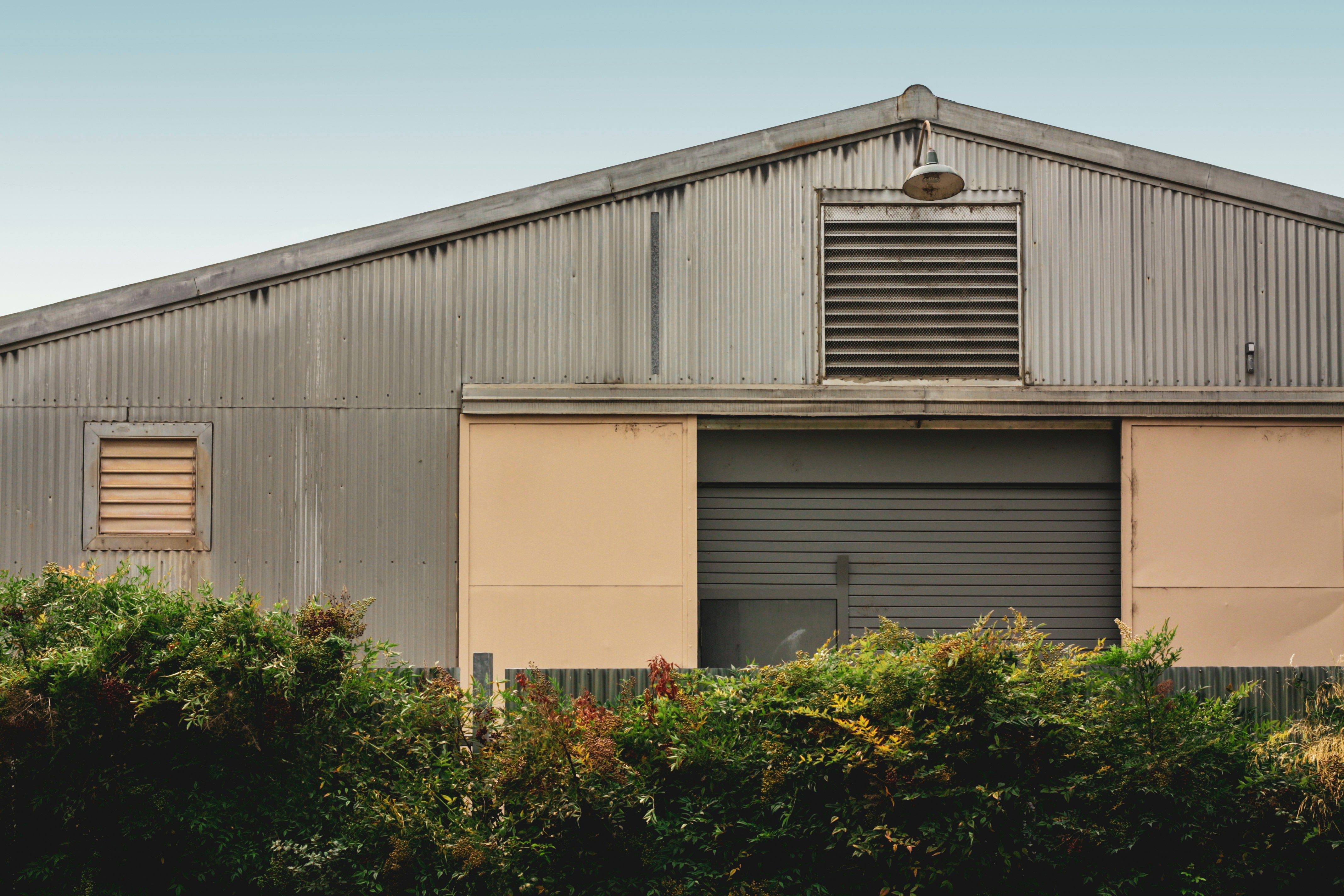
Metal Commercial Roofing for Tulsa Industrial Properties
Industrial properties have a different roofing conversation than office buildings or retail strips. The buildings are bigger. The hold periods are longer. The interior environments are sometimes harsh.
The roof has to perform for decades, sometimes through chemical exposure, sometimes through heavy mechanical equipment, sometimes through both.
For the right Tulsa-area industrial properties, metal commercial roofing is the answer that quietly outperforms every alternative — but the upfront cost gives a lot of owners pause.
Over a 50-year hold, the math typically works dramatically in metal’s favor. Over a 15-year hold, it usually doesn’t. Knowing where your building falls in that spectrum is the difference between a smart capital investment and an expensive mistake.
This guide walks through commercial metal roofing for Tulsa industrial properties: when it’s the right call, when it isn’t, what it costs, and how to think about the long-term economics.
Why Metal Roofing Is Different in Industrial Settings
Standing seam metal roofing is dramatically different from single-ply or asphalt-based commercial systems in several ways that matter on industrial buildings.
Lifespan
Quality metal systems with Kynar 500 / PVDF finishes routinely last 50-60 years before any meaningful replacement is needed. With proper maintenance, 70+ years isn’t unusual. Compare to 20-30 years for TPO/EPDM and 25-35 for BUR.
For long-hold industrial properties — the 40+ year hold typical of owner-occupied manufacturing or distribution — metal’s longevity is a defining advantage.
Hail performance
Many standing seam metal panels carry Class 4 impact ratings (UL 2218) — the highest available. In Oklahoma’s hail-prone climate, this means the roof handles severe hail events that would total membrane systems.
We’ve inspected metal industrial roofs after 2"+ hail events that showed only minor cosmetic dimpling while neighboring asphalt or single-ply roofs were total losses.
Wind performance
Properly engineered standing seam systems with appropriate fastening can handle winds well above 130 mph. Tornado-adjacent gusts have rolled membrane systems while neighboring metal roofs stayed put.
Foot traffic and equipment
Industrial roofs see heavy equipment access — HVAC units, conveyors, exhaust systems, antennas, and the ongoing service traffic that comes with them. Metal roofs handle traffic dramatically better than membrane systems.
Fire resistance
Standing seam metal roofs are non-combustible and contribute to better building fire ratings. For industrial buildings with fire risk concerns, this can affect insurance premiums and code compliance.
Energy efficiency
Cool metal roofs with high-emissivity Kynar finishes can hit SRI 70+ in light colors, even higher in pure white. Significant cooling cost savings in Tulsa’s climate.
The Cost Reality
Standing seam metal commercial roofs cost more upfront than alternatives. For 2026 Tulsa pricing:
Standing seam metal commercial roof: $14-$25+ per sq ft fully installed
TPO single-ply: $7-$15 per sq ft
Modified bitumen: $8-$14 per sq ft
EPDM single-ply: $6-$13 per sq ft
For a typical 50,000 sq ft Tulsa industrial building:
Standing seam metal: $700,000-$1,250,000+
TPO: $350,000-$750,000
Modified bitumen: $400,000-$700,000
EPDM: $300,000-$650,000
Metal is clearly more expensive upfront — typically 2x to 2.5x the cost of single-ply alternatives.
When the Long-Term Math Works for Metal
The case for metal isn’t about upfront cost. It’s about total cost of ownership over the building’s life.
Scenario: 50-year hold industrial building
A 50,000 sq ft industrial building, owner-occupied, planned 50-year hold:
Path A: Standing seam metal - Initial cost: $1,000,000 - Replacement at year 50: minor work likely needed, probably not full replacement - Maintenance over 50 years: ~$150,000 - Total 50-year cost: ~$1,150,000
Path B: TPO with periodic replacement - Initial cost: $500,000 - First replacement at year 25: $750,000 (real-world pricing increases over time) - Maintenance over 50 years: ~$200,000 - Total 50-year cost: ~$1,450,000
The metal roof, despite costing 2x as much initially, costs less over 50 years. Plus, metal avoids the operational disruption of mid-life roof replacement.
Scenario: 20-year hold
A 50,000 sq ft commercial property with a 20-year hold:
Path A: Standing seam metal - Initial cost: $1,000,000 - Sale at year 20: roof has 30+ years of remaining life, partial value capture - Net cost over 20 years: ~$700,000
Path B: TPO - Initial cost: $500,000 - Sale at year 20: roof has 5-10 years of remaining life - Net cost over 20 years: ~$400,000
For shorter holds, the metal premium typically isn’t recovered through resale value — at least not yet, though the market increasingly values quality long-term roof systems on industrial properties.
The crossover point — where metal’s lifecycle cost beats single-ply’s lifecycle cost — is typically around 25-35 years of hold time. For industrial buildings being held longer than that, metal’s economics work.
Where Metal Industrial Roofing Is Often the Right Call
Specific situations where metal is typically the strongest choice:
Owner-occupied industrial buildings
Manufacturing facilities, distribution warehouses, and other owner-occupied industrial properties typically hold for 40+ years. The capital investment in metal pays back over the hold period.
Long-term lease industrial
Single-tenant industrial leases of 20+ years with renewals often justify metal investment, particularly when the tenant participates in the capital expense decision.
Heavy hail/wind exposure
Buildings in particularly hail-prone or wind-prone areas of the metro benefit dramatically from metal’s superior performance. Insurance premium reductions can be meaningful.
Roofs with heavy equipment access
Industrial buildings with significant rooftop equipment, regular service traffic, or installed walkways for access benefit from metal’s traffic durability.
Fire-sensitive industrial
Manufacturing involving combustible materials, chemical processing, or other fire-risk activities benefits from non-combustible roofing for both code and insurance reasons.
Solar-ready buildings
Standing seam metal is the most solar-friendly commercial roof option. Panels mount to the seams without penetrating the membrane, eliminating leak risk and simplifying installation. For industrial buildings planning solar, metal is the obvious choice.
Where Metal Probably Isn’t the Right Call
Metal isn’t the answer for every industrial building:
Short-hold or speculative investment properties
Buildings being held for 5-15 years rarely recover the metal premium through operations or resale value.
Tight initial capital budgets
If the project budget can’t accommodate metal’s upfront cost, alternatives that fit the budget are better than stretching the project.
Buildings with planned major modifications
If significant rooftop additions, structural changes, or expansions are planned within 10 years, the integration challenges may favor more flexible single-ply systems.
Buildings with marginal structural capacity
Standing seam metal is heavier than single-ply (similar to or slightly heavier than modified bitumen). Older buildings with marginal structure may not support the weight without reinforcement.
Standing Seam Profiles and Options
Metal commercial roofing comes in several profiles:
Standing seam (true mechanical seam)
Premium metal roofing with vertical ribs that lock together mechanically. The most weather-tight option, suitable for low slopes (1:12+) and high-performance applications.
Snap-lock standing seam
Simpler installation profile where panels snap together along seam ridges. Slightly faster install, slightly lower performance, lower cost. Suitable for moderately low slopes and most commercial applications.
Trapezoidal panels
Wider, less expensive profiles often used on agricultural and lower-budget industrial buildings. Through-fastener attachment (rather than concealed clips) makes them less suitable for true low-slope applications but cost-effective for moderately sloped industrial roofs.
Insulated metal panels (IMPs)
Composite panels combining metal facing with foam insulation core. Used for buildings where wall and roof are integrated systems (cold storage, food processing, some manufacturing).
For most Tulsa industrial commercial new construction, true standing seam (mechanical seam) is the premium specification, with snap-lock as the cost-effective alternative.
Finishes That Matter
Metal roof longevity depends heavily on the finish:
Kynar 500 / PVDF
The premium architectural finish. UV-resistant, color-stable for decades, available in extensive color palettes. Standard specification for quality commercial work.
Lifespan: 30-40 years before color fade is significant; structural integrity 50-70+ years.
SMP (Silicone-Modified Polyester)
Mid-tier finish, less expensive than Kynar but with shorter color life.
Lifespan: 20-30 years before fading is noticeable.
Polyester
Budget finish, typically used on agricultural and very cost-sensitive applications.
Lifespan: 10-20 years before significant fading.
For commercial industrial work in Tulsa, we recommend Kynar 500 finish nearly universally. The cost premium over SMP is small; the longevity advantage is substantial.
Common Tulsa Industrial Metal Roof Issues
Issues we see on metal industrial roofs:
Fastener failures
On systems using exposed fasteners (typical on lower-grade trapezoidal panels), the rubber gaskets and fasteners themselves age and can leak. Periodic fastener inspection and replacement is critical.
True standing seam systems with concealed clips don’t have this issue — the panel mechanism doesn’t penetrate the membrane.
Sealant failures at penetrations
Where pipes, HVAC units, and other equipment penetrate metal roofs, sealants and flashings degrade with thermal cycling. Annual inspection and renewal as needed extends roof life.
Edge metal failures
The flashings at building edges, ridges, and valleys see significant thermal stress. Quality original installation prevents most issues; aging may require renewal.
Coating degradation
The protective finish on metal panels degrades over time, particularly in high-UV environments. Visible chalking or fading isn’t necessarily failure but signals the protective layer is aging.
Galvanic corrosion
Where metal panels contact dissimilar metals (copper flashings, certain fasteners), galvanic corrosion can develop. Proper isolation is built into quality installations.
Working With the Right Contractor
Metal commercial roofing requires specific expertise. Many roofers who handle membrane systems aren’t experienced with metal. What to look for:
Specific metal commercial experience
Portfolio of completed standing seam projects, ideally on similar building types in the Tulsa metro.
Manufacturer training and certification
Major manufacturers certify installers. Verify certification for the specific manufacturer/product being quoted.
Detailed engineering
Quality metal projects involve real engineering — wind uplift calculations, panel layout, expansion provisions, structural verification. Quotes that don’t address engineering aren’t real quotes.
Specialty equipment
Metal panel installation requires specific tools — seam closing machines, panel cutting and forming equipment, specialty fasteners. Contractors lacking equipment shortcut installation quality.
Insurance coverage at appropriate levels
Commercial metal roofing on industrial buildings involves higher insurance requirements. Verify coverage.
Get a Real Industrial Metal Roof Quote
If you manage or own a Tulsa-area industrial property and metal roofing is on your radar — for new construction, replacement, or planning purposes — schedule a free commercial roof inspection with our team.
We’ll evaluate your building’s specific characteristics, discuss whether metal is the right choice or whether an alternative fits your situation better, and provide a realistic cost analysis including both upfront and lifecycle considerations.
For long-hold Tulsa industrial properties, metal is often the financially right answer despite the upfront cost. We’ll help you see whether your specific building is in that category — and if so, deliver a quality installation that performs for decades. If metal isn’t the right call for your situation, we’ll tell you that too and recommend a more appropriate system.