
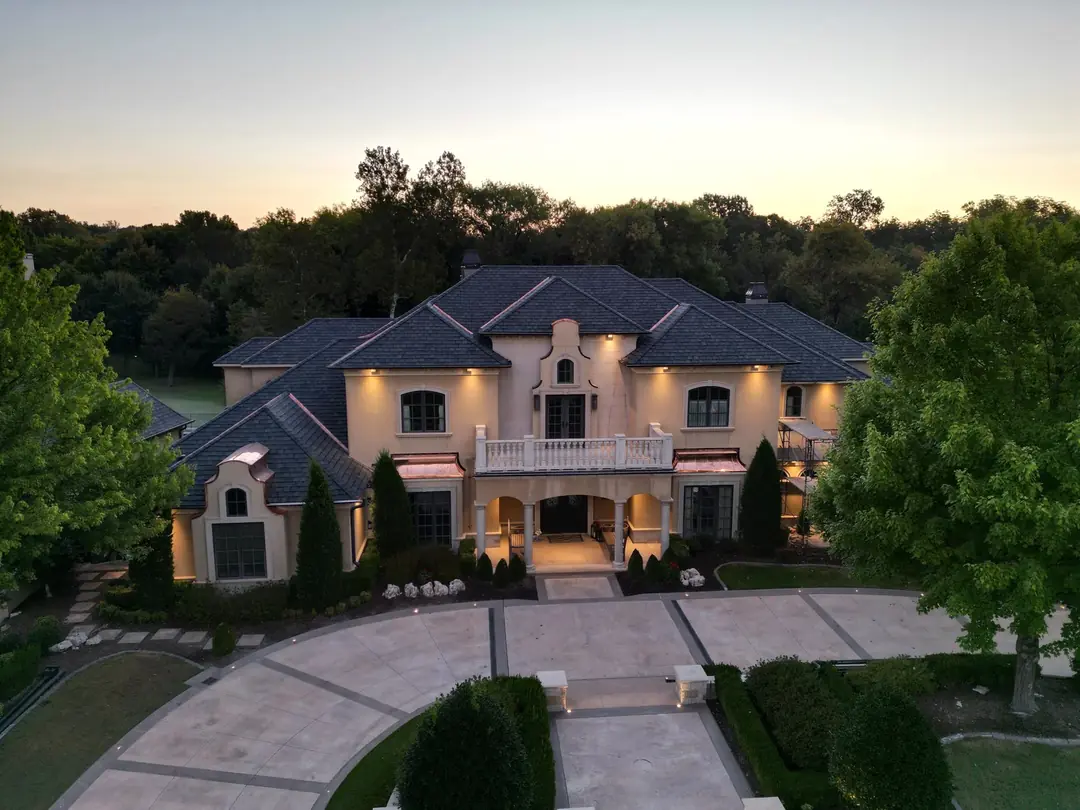
Apartment Complex Roofing in Tulsa: A PM’s Guide
Roofing for Tulsa apartment complexes: phased vs. all-at-once replacement, 2026 per-building costs, tenant communication, insurance, and capital planning.

The short answer: Multi-family roofing in Tulsa usually costs $10,000 to $85,000 per building with architectural shingles, depending on size. The big decisions are whether to replace every building at once (better pricing, one warranty date) or phase it over budget years, and how to keep tenants informed. Percentage wind and hail deductibles on large complexes can be big, so check yours before storm season.
In this guide 12 sections
- Why Multi-Family Roofing Is Different
- The Strategic Question: All at Once or Phased?
- Common Tulsa Apartment Complex Roofing Issues
- What Multi-Family Roof Replacement Costs
- Tenant Communication Best Practices
- Insurance Considerations
- Long-Term Capital Planning
- Tenant Communication Templates
- Red Flags in Multi-Family Roofing Quotes
- Working With the Right Contractor
- Frequently Asked Questions About Apartment Roofing
- Get a Multi-Family Roof Assessment
Multi-family roofing is its own discipline. The buildings aren’t quite commercial, they’re residential structures, often using residential materials and methods, but the scale, the operational realities, and the financial structures look more like commercial property management than like single-family roofing.
Get the approach wrong and you’re looking at six-figure capital expenditures handled poorly, tenant frustration, and accelerated wear that compounds across multiple buildings.
This guide is built for the Tulsa-area property managers, regional managers, and ownership groups responsible for apartment complex roofing. We’ll cover the specific challenges multi-family presents, how to approach phased replacement strategies, what costs realistically look like, and how to think about budget planning across portfolios.
Why Multi-Family Roofing Is Different
A few specific factors make apartment complexes diverge from both single-family and standard commercial roofing.
Multiple buildings, often built simultaneously
A typical Tulsa apartment complex has anywhere from 3 to 30+ buildings, all built in roughly the same year. This means roofs across the complex age together, and reach end of life together. Managing the synchronized aging across multiple buildings is a primary capital planning challenge.
Building variety within a complex
Many complexes mix building types: townhome buildings (2-3 units), garden apartments (4-12 units), garage buildings, leasing offices, fitness centers, laundries. Each may have different roof characteristics requiring different approaches.
Shared building roofs
Most apartment buildings have continuous roof systems shared across multiple units. A single roof failure affects multiple tenants. Coordination during work is more complex than single-family.
Operational continuity
Tenants live in the buildings. Roof work creates noise, dust, debris, and access issues that affect daily life. Managing tenant communication is part of the job.
Insurance and liability
Apartment complexes have different insurance dynamics than single-family or owner-occupied commercial. Tenant displacement, liability exposure, and claim handling all involve more parties.
Capital structure
Apartment complexes are typically owned by ownership groups, syndication, or REITs with specific financial structures. Capital expenditure decisions often require investor approval, financial analysis, and timing considerations beyond the operational level.
The Strategic Question: All at Once or Phased?
When apartment complex roofs reach end of life, owners face a strategic decision: replace all buildings together or phase replacement across multiple years.
All-at-once replacement
Advantages:
- One coordinated project
- Single contractor relationship
- Volume discount opportunities (5-15% savings on large projects)
- All buildings on consistent timeline going forward
- Single insurance claim if damage-driven
- Can be completed in 30-90 days
Disadvantages:
- Massive capital expenditure in single year
- All buildings under construction simultaneously (more tenant disruption)
- Cash flow strain
- Contractor capacity may limit options
Best for:
- Smaller complexes (3-8 buildings)
- Storm damage situations covering all buildings
- Recently acquired complexes where systematic capital planning starts fresh
- Owners with capital available for one-time major expenditure
Phased replacement
Advantages:
- Capital expenditure spread over multiple years
- Gradual tenant disruption rather than concentrated
- Allows learning from early phases to optimize later phases
- Maintains buildings as they reach individual peak need
- Better cash flow management
Disadvantages:
- Multi-year project commitment
- Multiple contractor mobilizations
- May not capture full volume discounts
- Some buildings continue aging while waiting for replacement
- Coordination complexity over time
Best for:
- Larger complexes (10+ buildings)
- Owners with constrained capital
- Complexes where some buildings are visibly more degraded than others
- Long-term hold properties with stable cash flows
Hybrid approaches
In practice, many large complexes use hybrid strategies:
- Replace most-deteriorated buildings first (year 1)
- Replace mid-condition buildings at peak need (years 2-3)
- Coating restoration on buildings with remaining life (year 2)
- Full replacement of remaining buildings as they reach end of life (years 4-7)
The right approach depends on specific circumstances. A reputable contractor will help develop a multi-year plan rather than insisting on a single approach.
Common Tulsa Apartment Complex Roofing Issues
Specific patterns we see across multi-family properties:
Premature aging from inadequate ventilation
Many apartment buildings built in the 1980s-90s have undersized attic ventilation by current standards. The result: attics overheat, shingles age faster, and apartment cooling costs run higher. Ventilation upgrades during replacement extend new roof life and reduce tenant complaints.
For more on ventilation specifics, see our attic ventilation guide: same principles apply.
Storm damage that wasn’t fully addressed
After major storms, complexes sometimes do partial repairs to address active leaks but defer comprehensive evaluation. Residual damage compounds over months and years until full replacement is needed.
Drainage issues at building joints
Where two roof slopes intersect at building corners or where multi-building complexes have shared drainage, design or aging issues create persistent leak zones.
Mismatched repair history
Multiple repairs over the years using different materials, different contractors, and different qualities create patchwork roofs where replacement is more economical than continued maintenance.
HVAC modifications
Residents (or maintenance) modify HVAC, antennas, satellites, or other rooftop installations creating leak points the property doesn’t track.
What Multi-Family Roof Replacement Costs
For 2026 Tulsa apartment complex roofing pricing:
Per-building pricing (architectural shingle)
- Small townhome building (2,000-3,000 sq ft of roof): $10,000-$18,000
- Medium garden apartment building (4,000-8,000 sq ft): $18,000-$45,000
- Large 12+ unit building (10,000-15,000 sq ft): $45,000-$85,000
Per-complex projections
- Small complex (3-5 buildings, 100-150 units): $50,000-$200,000
- Medium complex (8-15 buildings, 200-400 units): $200,000-$600,000
- Large complex (20+ buildings, 500+ units): $500,000-$1,500,000+
Factors moving costs
- Higher: Class 4 impact-resistant shingle upgrade (+$1,500-$3,500 per building); Significant decking replacement; Tear-off of multiple existing layers; Ventilation upgrades; Premium architectural shingle products
- Lower: Volume / multi-building discounts; Off-peak scheduling; Insurance claim coverage of substantial portion; Coating restoration where appropriate (less common in residential apartments but possible on flat sections)
For broader residential pricing context, our cost guide applies.
Tenant Communication Best Practices
The operational success of apartment roofing is heavily dependent on tenant communication. Best practices:
Pre-project communication
Send written notice 4-6 weeks before work starts. Include:
- Project description
- Schedule (start date, expected duration)
- What tenants should expect (noise, debris, parking impacts)
- Safety information
- Contact information for questions
- Concessions if applicable
During-project updates
Weekly or as-needed updates on:
- Current building being worked on
- Expected completion of current phase
- Any delays or changes
- Resolved issues
Post-project communication
Confirmation that work is complete, any final cleanup details, and warranty information for the new roof.
Tenant accommodations
Some complexes offer accommodations during major work:
- Parking adjustments during work
- Daytime hours acknowledgement (no early morning starts)
- Compensation for major disruption (rare but possible)
- Relocation assistance for tenants particularly affected
The contractor and property management need to coordinate on tenant communication. Disputes between tenants and contractors that property management hasn’t pre-empted become property management problems.
Insurance Considerations
Apartment complexes have specific insurance dynamics:
Wind/hail deductibles
Multi-family properties typically have wind/hail deductibles expressed as percentages of building values. On a $20M complex, a 1% wind/hail deductible is $200,000: a substantial number.
Loss assessment coverage
Some insurance structures involve master policies with loss assessment to individual unit owners (more common in condo than apartment). Verify your structure.
Code-upgrade coverage
Ordinance and law coverage allows insurance-paid replacement to incorporate code-mandated upgrades. For apartment complexes with older construction, this can be worth tens of thousands of dollars during a covered replacement.
Documentation matters
Maintaining detailed inspection and maintenance records strengthens claim positions and reduces depreciation arguments.
Long-Term Capital Planning
For long-term apartment complex ownership, systematic capital planning around roofing:
Lifecycle expectations
- Architectural shingle: Plan for replacement at year 22-25 in our climate
- Class 4 architectural: Plan for replacement at year 25-28
- Reserve fund building toward expected replacement cost
Reserve fund mathematics
For a 20-building complex with $1M expected replacement cost:
- Annual reserve contribution: $40,000-$50,000 (over 25 years)
- Builds the capital needed for systematic replacement
- Avoids financial strain when replacement comes due
Mid-life maintenance investment
A modest annual maintenance budget (often 0.5-1% of building values) extends roof life and catches issues while small. The ROI is significant.
Coordination with other major capital expenditures
Roofing, HVAC, parking lot, and other major capital expenditures often hit similar life expectancies. Long-term planning across these systems prevents financial concentration.
Tenant Communication Templates
Good tenant communication around major roof work makes the project significantly smoother. Templates worth adapting:
Initial notice (4-6 weeks before)
Subject: Important Notice: Upcoming Roof Replacement
Dear Resident,
We are pleased to inform you that we will be replacing the roof on your building beginning [date]. This investment in the property will provide improved protection and energy efficiency for many years to come.
What to expect:
- Project duration: approximately [duration]
- Hours of work: [time range, typically 7am-6pm]
- Expected noise and activity in your building’s vicinity
- Brief debris and material delivery
- Construction crew presence during work hours
Your safety and convenience matter to us. We will:
- Maintain access to your building throughout the project
- Provide updates on progress
- Coordinate parking arrangements as needed
- Address any concerns promptly
Please contact [property manager] with any questions. Thank you for your patience as we improve the property.
During-project update (weekly)
Brief progress updates noting which buildings are currently under work, expected completion timing, and any items requiring tenant attention.
Project completion notice
Confirmation that work is complete on the tenant’s building, summary of the new roof and warranty, and contact info for any post-project concerns.
Red Flags in Multi-Family Roofing Quotes
A few patterns to watch for when evaluating quotes for apartment complex roofing:
Per-building pricing inconsistency
Quote with dramatically different per-building prices for similar buildings warrants explanation. Sometimes it’s legitimate (decking varies, complexity differs); sometimes it’s pricing inconsistency.
Vague decking allowances
Quotes that don’t specify per-sheet decking pricing leave you exposed to mid-project change orders. Insist on specifics.
Manufacturer certification claims
Verify any claimed certifications. The certification matters for warranty terms and quality control.
Workmanship warranty terms
For multi-family work, long, transferable workmanship coverage matters, especially if the property might sell during the warranty period.
Insurance documentation
Multi-family work requires significant insurance coverage. Verify general liability, workers’ comp, and any specific endorsements.
References from similar properties
A contractor with single-family experience claiming multi-family capability is a different proposition than one with established multi-family portfolio. Verify.
Working With the Right Contractor
For multi-family roofing, contractor selection criteria:
Multi-family specific experience
Portfolio of completed apartment complex projects, with references. The operational reality of multi-family is different from commercial or single-family; experience matters.
Capacity to handle scale
The contractor needs to demonstrate capacity to complete projects of your size. A contractor who’s never done a 15-building project shouldn’t be your first choice for one.
Manufacturer certifications
For warranty and quality, manufacturer-certified contractors are essential.
Insurance coverage at appropriate levels
General liability and workers’ comp at levels appropriate for multi-million-dollar properties.
Communication systems
For larger projects, the contractor’s tenant communication systems, project management approach, and reporting matter as much as the roofing skill itself.
Storm response capacity
If insurance-driven, the contractor’s ability to respond quickly and mobilize at scale matters.
Frequently Asked Questions About Apartment Roofing
How much does it cost to reroof an apartment complex in Tulsa?
Roughly $10,000 to $85,000 per building depending on size, or about $50,000 to $200,000 for a small 3 to 5 building complex and $200,000 to $600,000 for a medium complex, with architectural shingles.
Should we replace all the roofs at once or in phases?
All at once usually gets better pricing and one warranty date; phasing spreads the capital cost across budget years. After a storm claim, doing the damaged buildings together is usually simplest.
Can tenants stay during the roof replacement?
Yes. Tenants stay in place; good communication about dates, parking, noise and nail cleanup is what keeps complaints down.
Get a Multi-Family Roof Assessment
If you manage or own an apartment complex in the Tulsa metro and you’re approaching major roof decisions, full replacement, phased planning, post-storm response, or just due diligence, schedule a free assessment with our team.
We do thorough multi-family inspections that include:
- Walking each building’s roof
- Photo documentation
- Condition rating per building
- Phasing recommendations
- Cost projections by phase
- Capital planning input
- Tenant communication support
For Tulsa-area apartment complex ownership and management, the systematic approach to roofing across multiple buildings is the difference between effective capital management and reactive crisis-handling. We’re here to help you build the systematic approach.
Schedule Your Free Tulsa Apartment Complex Inspection →
Sources and disclaimer. Information in this article comes from manufacturer documentation, industry standards and RainTech’s own commercial roofing experience. It was current as of September 24, 2026; laws, insurance rules, manufacturer terms and prices change. This article is general information, not legal, insurance, tax or financial advice.


